Sunday, May 11, 2014

After a 19-month hiatus, Louie is still unlike any other TV show, and better than almost all of them


It's understandable if for a while, you forgot that Louie existed.  After all, the last episode of season three aired on September 27, 2012 -- eons ago in the TV world.  On top of that, it decided to take a break during a year where there was a surfeit of good television, so it was easy for that loss not to be felt.  But now that it's back for a 14-episode fourth season, it's very clear that we were missing an important piece of television.  During its first three years, the show was celebrated as a sui generis marvel, delivering stories with a level of experimentation and depth seen in few other corners of the television landscape.  With a program like Community, you never know what kind of genre riff you're going to get from week to week, but with Louie it feels like a different show each episode.  It's as if FX just let him tell whatever kinds of stories he feels like telling on a given day, and the result is a serious of shorts that range from absurd hilarity, to profound beauty, to soul-crushing despair.

This year, FX has decided to air two episodes every Monday, the first of those being "Back" this past week.  Though named after the random back pain Louie is afflicted with, the episode also serves as a nice reintroduction to the show's worldview and internal logic.  It opens with a stand-up bit about Louie realizing that he had thought he was turning 45 on his 46th birthday, and when a friend corrected him, he recalled feeling liked he aged two years at once.  The story is an example of Louis C.K.'s gift as an observer, able to take slices of life and turn them into something funny and achingly real.  "Back" then transitions to show another one of Louie's best qualities: its delightful surreal humor.  Trash men come to pick up the garbage in front of C.K.'s apartment, and the amount of noise they make reaches an absurd level, to the point where they literally break through his window and start banging cans together in his bedroom.  Later in the episode, we also see the return of Louie's daughters (Hadley Delaney and Ursula Parker, two of television's very best child actors), along with a scene of Louie playing poker with many of the comedians we've seen pop up over the last three seasons.

At first, "Back" feels a little shaggy, nothing more than Louie going about his day, ambling from one place to another.  But it's actually held together by its themes of pain and aging, two ideas that pop up endlessly on the show.  All of the stand-up bits that run throughout the episode are about getting old and tired: Aging twice in one year, being so tired you could sleep all day, 31 feeling old until you hit 46 and realize what old really is.  When he goes to the doctor after hurting his back in the middle of the episode, the doctor tells him that there's no cure.  It's a bit of absurdity that actually highlights the show's ethos.  Pain is just something that happens; we all have to endure it.  The last bit of stand-up shows Louie talking about how life moves on even when you die ("For one, there's a Super Bowl that happens every year.").  To him, and by extension, the show, happiness and comfort are hard won.  The best you can do is eek out a little bit of joy while you can.

"Model," the second episode, structures itself around its two guest actors.  The first of them is Jerry Seinfeld, who offers Louie an opening gig at a benefit for heart disease in the Hamptons.  Seinfeld appears in a way that almost seems magical, popping into frame to place this fantastic opportunity on Louie's lap after he fails miserably while trying to pick up women at a bar.  As is the natural order on this show, things go wrong almost immediately, as he arrives at the benefit and realizes he's woefully under-dressed.  Things get even worse from there when he has to go on stage and absolutely bombs, due to his inability to read the room.  His jokes about the rich basically being slave owners is the last thing to talk about in a room full of trillionaires ("There are trillionaires now?," asks Louie.  "Yes," says Seinfeld), and only generates one laugh from the crowd.

But this episode is all about the interesting chain of events that causes successes and failures to bleed into one another.  Just like Louie's failure to flirt with women at the bar leads to the opportunity to open for Seinfeld, his bombing at the benefit leads him to meeting the one woman who was laughing in the crowd (played by Yvonne Strahovski).  She's everything that a guy like him would dream of having, but could never get: blonde, skinny, rich, mysterious, a model, she laughs at your jokes, and is willing to have sex with you.  Strahovski's performance is the best she's ever given, warm and relaxed in a way that makes her character seem approachable but unattainable at the same time.  Like his arrival at the benefit, Louie stumbles as soon as he enters her world, this time literally slipping on her floor when he walks in.  The whole time, as she takes him for a ride in her fancy car and invites him into her lavish house, we're expecting the other shoe to drop.  And it eventually does.  After a session of improbable-for-him sex, this dream woman starts tickling Louie, and he accidentally knocks her out cold.  It's almost as if the episode sets up this fantasy and then punishes him for having the fantasy in the first place.

He takes her to the hospital and calls Seinfeld for help, only for Seinfeld to wash his hands of the whole ordeal and do nothing more than recommend Louie a lawyer.  The lawyer informs him that the model's family plans to sue him for a million dollars, money that he could never dream of having.  Even though they're rich and he's poor, the lawyer tells him that's just the way things have to be.  Much like the back pain in "Back," he's just going to have to deal with it.  What makes the show so special though, and what saves it from just being surreal misery porn, is that it doesn't end things there.  Instead, it concludes with Louie getting some sympathy from one of the women at the bar who rejected him earlier, after she hears his story.  The cycle of success and failures continues on.

Both of these episodes do that wonderful Louie thing where they just wash over you, leaving you with this mixture of exhilaration and melancholy.  It's a feeling that it makes it optimal to view the show in isolation, which initially made me worried about two episodes being aired back-to-back, but "Back" and "Model" show two different sides of Louie and they mix well together.  Though they tell different stories and have different tones, both episodes arrive at the same conclusion, one that drives the entire show: Life is unfair...but you do what you can.  It's great to be reminded of that.

Wednesday, May 7, 2014

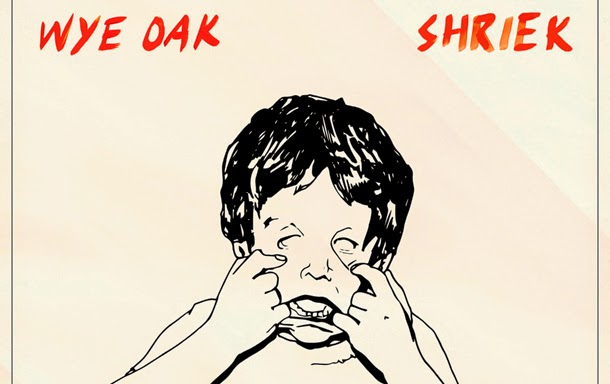
Wye Oak abandon guitars on "Shriek," but maintain their greatness


When Wye Oak first announced that their latest album, Shriek, wasn't going to feature any guitar, it seemed like a huge mistake.  Their previous three albums weren't defined by lead singer/guitarist Jenn Wasner's six-string prowess, but it was a large part of the appeal.  She doesn't just peddle in riffs -- her guitar work can drone on, provide texture, and yes, deliver a good riff if needed.  Indie rock is already increasingly becoming a genre that lacks bite, and the synth-heavy prospect of this record looked to be a significant blow, given Wasner's status as one of the best guitarists around.

It's true that nothing on Shriek serves the same function that the band's versatile guitar sounds did, but the change in sound has proven to be a lateral move instead of a step down.  The record has a great sense of space that allows the songs more room to breathe -- think "We Were Wealth" on Civilian, but stretched out to an entire album.  There's always been an air of mystery to Wye Oak's songs, but the guitars were a centering force.  Without them, the songs are even more wispy, floating about like some small wonder.  They're slippery tunes that keep your attention by always wriggling out of grasp.  Synths were used merely as a textural element on the band's previous albums, but they've stepped up to fill the vacuum here.  They carry the songs on this record, which often take a more pop leaning in the vein of Wasner's solo efforts in Dungeonesse and Flock of Dimes.  "Glory," one of the faster paced songs, is centered around a catchy 80s hook, and the synthesizers even veer into chiptune territory in places.  And while they may not be the inventive, droney sounds of her guitar work, Wasner's debut as a bassist isn't too shabby either.  Her deep, knobby basslines add a new flavor to the songs that compliment the buoyant synths well.

The element in the band's formidable arsenal that gets the most time to shine is Wasner's voice.  Because people always praise her skills as a guitarist, they tend to elide over her voice, which has always been crystalline.  Before, it  cut through the atmospheric haze of the band's dronier sound, but now it lies right at the center of songs.  Her strengths as a vocalist really show on album highlight "Sick Talk," a swirling, dreamy song in the middle of Shriek.  The way her voice just swims around in those watery keyboards is a thing of beauty.  Despite that, the lyrics still manage to be as mush-mouthed as ever, but it's hard to care when their vehicle of delivery is so mesmerizing.

For getting so much pre-release buzz for its sonic changes, the record is more experimental from a structural standpoint.  Shriek is an album full of curveballs; it always keeps you on your feet.  There's something exhilarating and high stakes about the way that these 10 tracks twist and turn, giving little indication of what lies around the corner.  Just look at the way the high-stepping verses of "Despicable Animal" and the primal ones in "Paradise" dissolve into gorgeous, subdued choruses.  "I Know the Law" feels like it's about to spread wide open at any second, but the most it does is deliver a layered vocal bridge.  All of this makes the album seem academic, but it's actually quite relaxed and catchy.

Really, the band has never been afraid to change things up.  Go back and look at their discography and you'll see that even though there's a distinct Wye Oak stamp between albums, none of them sound the same.  If Children resembled the quiet indie rock that was standard at the time, The Knot ventures into post-rock territory, and Civilian alternates between dreamy and jagged.  In that light, Shriek is less a stylistic overhaul than it is a normal step along the path.  It'd be nice to hear prominent guitar and synth on the next record, but Wye Oak isn't about taking requests.  They give us what we need, not what we want.

Tuesday, May 6, 2014

Amazing Spider-Man 2 diminishes strong character work with its maddening plot


The best thing about movie studios making an outside of the box choice when choosing the director for a superhero movie is that the director in question often brings their non-blockbuster sensibilities to the project.  Take The Avengers, for instance.  Part of what makes it great is that at times it feels like Joss Whedon just wants the movie to be Buffy or Firefly, so great importance is placed on winking humor and strong group dynamics.  Likewise, Christopher Nolan brings an element of his intense psychological dramas into his Batman films that aren't present in the previous versions.  Choosing (500) Days of Summer director Marc Webb to helm Amazing Spider-Man was a gift and a curse for Sony.  On one hand, he brought his character-centric sensibilities to the film, delivering a Peter Parker (Andrew Garfield) that was much closer to the comic book version than Sam Raimi's interpretation ever was.  On the other, his inexperience with superhero -- or even action -- films showed, given its nonsensical plot and lack of compelling action setpieces.

Once again, Marc Webb has succeeded in making a good film about Peter Parker.  Even more so than the first installment, Amazing Spider-Man 2 feels like Webb just wanted to make (500) Days of Summer again.  The film picks up around the time of Peter's high school graduation, where he's still dating Gwen Stacy (Emma Stone).  He finds himself wrestling with everyday responsibility and his duty as a crime fighter, and it's made even more complicated by the guilt he feels for going against Gwen's father's dying wish for Peter to stay away from his daughter.  Just like the first time around, the scenes between Peter and Gwen are the highlight of the movie, due to Garfield and Stone's relaxed chemistry.  But it's not just a romantic relationship that Peter is embarking upon.  There's also the introduction Harry Osborn (Dane DeHaan), the childhood friend Peter reconnects with after the death of his father, Norman (this series sure has a thing about dead father figures, doesn't it?)  In just a few scenes the film establishes a warm, affecting relationship for the two of them, and between that and the love story with Gwen, Webb sets up a strong emotional foundation to hold up the story on.

Unfortunately, it all falls apart once the plot rears its ugly head.  Amazing Spider-Man 2 might be a good film about Peter Parker, but it's a terrible Spider-Man one.  While dealing with some street-level baddies, Spider-Man runs into Max Dillon (Jamie Foxx), a lowly employee at Oscorp.  Max is also a superfan of the titular web-slinger, a trait that the movie plays up in the most cliche and stereotypical way possible.  As if that weren't enough, he's also ignored by everyone around him, and when he's not being ignored he's being cruelly mistreated, a fact that eventually leads to a freak accident that gives him the power to control electricity.  It's a setup that's not inherently bad, and the idea of the "Accidental Villain" is a trope that comes up time and time again in comic books, but the execution is so poorly handled.  Max's full transition to Electro, during a laughably soundtracked scene in Times Square, feels like the product of a first draft in the way that it skips a few steps in mapping out a believable turn to villainy.  It's a moment indicative of this rebooted series as a whole -- always taking shortcuts to get to the spectacle.  

At least in the first film, the good parts were pretty easy to extract from the bad elements, but they're so entwined here that the merits of the sequel are almost lessened.  So much time is devoted to Electro, a villain who ultimately doesn't amount to much in terms of drama or excitement, that not enough is allocated to the relationship between Peter and Harry, which seems to be the real meat of the story.  The film's conclusion is effective and well-constructed, but it's not enough to forgive the bland plot that gets in the way of the strong character work for the majority of the story.  Ultimately, Amazing Spider-Man 2 is just as much of a mixed bag as its predecessor was.  The highs are may be higher, but that just makes the lows more frustrating.  Perhaps the third time will be the charm.

Sunday, May 4, 2014

Episode of the Week: Mad Men - "Field Trip"


Episode of the Week is a recurring feature devoted to examining a notable episode from the past week of television.

Season 7, Episode 3

Mad Men has always been very good at depicting how ruthless time is.  It's a show about the tension between history, which moves forward with a shark-like certainty, and characters who may or may not be willing to progress along with it.  If you want to see how unafraid of major upheaval creator Matt Weiner is, then look no further than the state of many of the people who were considered the main characters in season one.  Don, Roger, Pete, Betty, Bert; they're all characters who once dominated Mad Men's universe, but now find themselves orbiting much further from the center.  Even Peggy Olson, the symbol of upward mobility in the early years of the series, constantly finds herself approaching ceilings she can't quite break through nowadays.

"Field Trip," the third episode in the show's final run, is all about this idea.  Given that it's a show that's somewhat about history, it's fitting that Mad Men is so well-versed in its own.  No other show on television creates parallels between past and present events in the story quite like they do, and the final season especially seems to be constructing a nice symmetry with the first one.  It's no coincidence that this week's episode is rife with callbacks to season one: Megan's agent calling Don to let him know of her antics in California bears a strong resemblance to Betty's therapist calling him many years ago, Anne Dudek makes her return as Francine (with a job!), and Ken Cosgrove even mentions Don's iconic carousel speech in passing.

It's all in keeping with the battle of new and old that dominates "Field Trip."  Roger's attempt to bring Don back into the Sterling Cooper & Partners fold is a literalization of that battle.  Don is happy (albeit with a few reservations) to learn that Roger wants him back, only to find out that Roger doesn't really have the power to make that decision.  Much like Don was replaced by Lou Avery, a man more willing to toe the corporate line, what used to be Roger's role in the company is increasingly being filled by Jim Cutler.  One of the subplots of the hour involves Harry Crane and his request to get a computer for the office, in order to give the burgeoning media department the data it needs to move the company forward.  It's telling that the computer comes back up when the partners are discussing whether they should bring Don back.  While there's not a one-to-one translation between the duties of the computer and Don, the juxtaposition further highlights the relentless wave of time and its role in these people's lives.  The world has less use for creative types with intractable personalities like Don, just as it has less use for maverick account men like Roger, and just as it has less use for old-fashioned housewives like Betty.

Give or take a "Shut the Door.  Have a Seat," or a "Gypsy and the Hobo," Mad Men is rarely known for being tense, but the entire sequence of Don unexpectedly returning back to the office is moist-brow suspense at its finest.  Director Christopher Manley makes Don seem so alien in this place that was once his domain.  Slow motion shots track his initial appraisal of the office, marking the changes that have occurred during his leave of absence.  Lou stands there in a still pose as Don approaches him, not as a man, but a figure who now has what he once did.  The camera follows the action with a hesitance to match Don's, after he realizes that nobody expected him to be there, and the one man who did has not even arrived yet.  Every frame is as concerned with the space around Don as it is with him, as characters pop in and out with their varied reactions to his return; from Ginsberg's delight, to Peggy's disgust, to Joan's bewilderment.

Writers Matt Weiner and Heather Bladt link Don's return back to work with Betty's more literal field trip with Bobby to his teacher's family farm.  In a beautiful bit of editing, the episode cuts the long, agonizing Don scenes with short bursts of the Betty storyline.  And while the claustrophobic office setting couldn't be more different than the pastoral farmland, the placement of those scenes alongside each other is very deliberate.  The interesting thing is that Don's story has parallels to the field trip on both the Betty and the Bobby side of the equation.  Both he and Betty find themselves expecting a pleasant outcome from their respective treks, only for them to be soiled in some way.  And like Don, Bobby just wants to be loved, but is treated with harshness even after he tries to make up for the mistake he made in giving away his mother's sandwich.  (That Don mirrors a child in any way speaks volumes about his character at this point.)

Mad Men has always had a fascinating relationship with change.  It's not quite as cynical as The Sopranos' "people can change, but most find it too difficult and quickly give up on their efforts" worldview.  No, Mad Men often shows its characters stuck in cycles, but they're much more aware of it and are trying to break free in incremental ways.  If there's anything to suss out about the final season after only three weeks, it's revealing itself to be about the characters still screwing up and having their flaws, but making inroads to improving.  The Betty storyline is a perfect example of that.  Her asking Henry why her children don't love her near the end of the episode is a heartbreaking bit of self-awareness.  A real attempt to show warmth on her part ends horribly, and it's easy to see her becoming a better person if she'd just stop getting in the way of herself.

That's why the final scene of the episode is such a powerful one.  After forcing him to sweat it out for the entire day, the partners finally invite Don into the conference room to speak with them.  The framing tells you all you need to know about the power dynamics in place at the office.  Bert, Joan, and Cutler are on one side of the table, filling the frame when the camera cuts to them; meanwhile Roger, Don's only ally, is completely isolated on the other side.  They offer him a contract that's completely constricting, one that bans him from drinking unless it's business related, forces him to stick to a script, and requires him to answer to Lou Avery.  Essentially, the contract strips Don Draper of everything that makes him Don Draper.  The camera then cuts to Don, zooming in on him as if he's thinking the same thing, preparing to give them a kiss off and start his own agency.  But then he says "Okay."  It's a rare moment of compromise from him, but a necessary one if he wants to avoid becoming a relic that just fades away.  Don has always been a man who runs, but this year has shown him actively fighting against that instinct.  This is a Don who waits, who stays, who apologizes and almost means it.  He's finally not getting in the way of himself, at least for now.

"Field Trip," is a near-perfect episode of television, even more so than last week's walloping "A Day's Work."  It may not be as flashy as some of the show's most praised episodes, but it deserves to be in the conversation of top 10 episodes when all is said and done.  Not only does it provide surface level excitement with Don's return to Sterling Cooper & Partners, but it's also thematically airtight all the way through.  It's the kind of literary episode that they did so well in the early seasons -- every piece just fits together.   Just look at how many different ways the "new vs. old" idea pops up, or how neatly the two main storylines align themselves, or the way Megan's audition plotline is like a micro version of Don's return to the office.  After a slightly off sixth season, season seven of Mad Men has been a return to form, an example of the show firing on all cylinders once again.  In just three weeks, it has disrupted the Hannibal vs. The Americans narrative that many people (including myself) seem to have constructed when talking about the best show of 2014.  Clearly, Matt Weiner wants a seat at the table too.

Saturday, May 3, 2014

Pilot Talk 2014: Playing House


Every TV season, networks bring out a new crop of shows, in hopes that they'll be the next big hit.  Pilot Talk is devoted to figuring out whether these shows are worth your time based on the first episode.

Tuesdays at 10:00 PM on USA

Apparently, 2014 is the year for podcast favorites to make their TV breakouts.  First, there was Andy Daly, whose Review with Forrest Macneil just ended a debut season that solidified it as one of the highlights of 2014.  Now, it's time for Jessica St. Clair and Lennon Parham to shine.  The two of them are favorites amongst fans of Comedy Bang! Bang! for their zany characters, Marissa Wompler and Charlotte Listler, who've developed an elaborate and insane mythology over their many appearances.  This actually is the second TV show from the writing pair -- their first effort was the short-lived Best Friends Forever, which NBC cancelled after only a few episodes.  With a more refined premise and lower ratings expectations on the USA network, Playing House comes with the prospect of more success, and as a result a longer shelf-life, than its predecessor.

It's very clear that St. Clair and Parham's real life friendship informs their writing.  It was right there in the title of Best Friends Forever, and Playing House makes the dynamic between its two leads the main focus as well.  The first episode is a premise pilot, and if there's one fault to it, it's that it does a little too much to get the characters in the place that they'll be for the rest of the series.  After spending a few years doing business in China, Emma (St. Clair) returns back to her hometown for her best friend Maggie's (Parham) baby shower.  But when Maggie leaves her husband after discovering that he's been cheating on her, Emma decides to stay full-time and help her best friend raise the baby that's about to arrive.  Even typing those sentences was a chore, and the actual events are an example of the plot getting in the way of the comedy.

Not all of the comedy itself works either.  For example, the scenes in the beginning with Emma still in China seem a bit tone deaf with their racial humor.  However, in a genre where it usually takes a while to figure everything out, much of the material works surprisingly well.  The relationship between Emma and Maggie is particularly wonderful, and you can really see the chemistry between St. Clair and Parham shine through in their depiction of this friendship.  Fans of the two actresses will recognize some elements from their podcast appearances ("those mammer jammers could go all night," Parham's habit of singing along to cheesy old songs, etc.), but new viewers will be just as taken by their sharp comedic instincts and warm interactions.

Even more encouraging is that the second episode, which aired as a part of an hour-long premiere on Tuesday, is much better than the already-promising pilot.  Many second episodes of comedies just repeat the pilot, but "Bird Bones," shows the potential of what the show can do after all of the setup is out of the way.  The episode gives an increased role to Mark (the always funny Keegan-Michael Key), Emma's ex-boyfriend, and introduces his new wife Tina (Lindsay Sloane).  Sloane is hilarious as Tina, whom Emma and Maggie used to call "Bird Bones" in high school, due to the fact that she'd always get severe injuries from the most minor of scrapes.  Mark's storyline, which isolates the character from Maggie and Emma, shows that Playing House is capable of delivering laughs even when its two protagonists aren't onscreen.  The episode also does a good job of establishing the way the rest of the world views Maggie and Emma, which is with equal parts bemusement and frustration.  Their brunch with Bird Bones is sad and sweet, but most of all, it's extremely funny.  All of the pieces are there for Playing House, and if they just come together a bit more, then Parham and St. Clair could join Andy Daly in having one of the year's best new comedies.

Pilot Grade: B
Second Episode Grade: A-