Friday, May 17, 2013

"Star Trek Into Darkness" Soars With Its Action, Stumbles On Plot


J.J. Abrams's original 2009 Star Trek, with its full embracing of high-octane ship battles and space swashbuckling, was well-received by audiences and critics alike.  However, some of the diehard fans of the TV series were upset with Abrams for trading in the more philosophical musings of the show for summer blockbuster sheen.  Those detractors probably wouldn't be satisfied by Star Trek Into Darkness either, which doesn't have any higher ideas in mind, doubling down on its action-adventure style but losing a little bit of the first installment's magic along the way.

Opening in the middle of the action -- a classic Abrams technique -- Into Darkness immediately establishes itself as the romp that it is.  It quickly falls back into its familiar rhythm, delivering fun banter and an exciting mission that sets up the stakes of the film.  Much of the fun of the first film was seeing the great cast inhabit these beloved characters and watch them come together, so its comforting to see them back for another go-around.  Along the way, new additions are added, as to be expected from any sequel.  Alice Eve joins the crew as a previous character from the series, and she's a surprisingly fun addition to the cast, easily blending in with the rest of the Enterprise.  Elsewhere, the always awesome Peter Weller gives a commanding performance as Alexander Marcus, Admiral of the Starfleet.

Unfortunately, the problem is that the film is so fussy about constantly shaking up the dynamics of the group.  This would be fine, except for the fact that the status quo is returned just as soon as it is broken.  There are some interesting set-ups in the beginning that would serve as great places to build the story from, but the script seems so afraid to step out of its comfort zone.  One could argue that this continuous jostling within the group is a part of the film's underlying theme, but by resetting things so quickly, there's not any weight given to it.  None of these moments happen to have any major bearing on the plot and the characters, so there's no point of even making the choices in the first place.  Towards the end, this becomes particularly problematic, where a drastic plot point only serves to temporarily drive the characters forward, before negating everything two scenes later.

What the film lacks in a solid structure, it makes up for in spectacle.  J.J. Abrams catches flack for borrowing heavily from Steven Spielberg's playbook, but one of the best qualities that he's taken is the wide-eyed wonder that was in all of Spielberg's early work.  Into Darkness is filled with lush colors and vibrant energy and the universe seems endless in its possibilities.  Like Spielberg, Abrams understands the nature of the popcorn film.  Although these films tend to forget about the exploration aspects of the TV series, they still have a great spirit of adventure to them.  J.J.'s fluid camerawork, heavy on the use of spinning and swooping shots, keeps the action dynamic and exhilarating.  In his hands, the setpieces are frenetic and chaotic while still having a great geographical consistency.

After a while though, even the action starts to get in the way of things.  As the film goes on, the setpieces begin to come much quicker, with fewer moments of downtime in between them.  The final action sequence has some pulse-pounding moments, but lasts too long and eventually becomes exhausting.  Without any space to breathe, the third act feels like a claustrophobic and clattering experience.  What's shameful about the action-heavy conclusion is that the film has some potentially interesting things to say about the nature of authority.  Kirk and his crew are constantly wrestling with whether or not to follow the rules and to trust those above them.  Yet none of those ideas are able to be fully explored because the film is so overstuffed.

Even still, the whole thing is able to skate by on its charm and great cast.  Abrams has toned down his heavy use of lens flare (which never bothered me much) and the film is full of gorgeous spacescapes and whiz-bang special effects.  Chris Pine and Zachary Quinto offer performances that do well to further the bond between Kirk and Spock that was established in the first film.  Overall, Star Trek Into Darkness is the definition of a solid summer blockbuster -- hefty enough to be satisfying, but too light to make any lasting impact.

Wednesday, May 8, 2013

Chance the Rapper's "Acid Rap" is an Early Contender for Album of the Year


Rap is, or at least has lately become, an inherently cold genre.  Built on the foundation of urban ideals, many of the greatest and latest have made a career focusing on songs about running drugs and gunning thugs.  That's not to say that rap music can't be fun anymore, but even so called "fun" or "lavish" music -- the MMG crew or Watch the Throne -- takes on a chilly hedonistic feeling.  Even a rapper like Drake, maybe the first person you'd think of when asked to name a "soft" rapper, explores the cold disconnect between wanting to be genuine while still needing to exude braggadocio.  I can't say that I blame the rap world for retreating back to these default modes of comfort.  After all, making music full of genuine feeling is difficult.  More often than not, artists like J. Cole push platitudes about "the struggle" and just come off as corny.

Perhaps the last popular bastion of warm rap music was Kanye West.  Over the years, he's become so cloistered behind his own wall of ego and self-involvement that it's easy to forget how earnest his music used to be.  Relistening to The College Dropout recently, I was amazed by how frequently moved I was by it.  It's a mildly flawed album with a misstep or two, but it's a work of obvious passion and emotion.  Looking back from a 2013 perspective, it's hard to imagine that album not getting laughed off the face of the Earth.  Yet somehow Kanye weaves themes of family, education, and religion into lush, completely sincere songs that totally work.

If there's anybody to pick up where old-school Kanye West left off, it's the 20 year old Chicago native, Chance the Rapper.  His most recent mixtape, Acid Rap, might be the warmest, most exuberant rap release I've heard since I first listened to The College Dropout in the 7th grade.  That's not to say that it's as sonically layered and exquisitely detailed as Kanye's debut (which itself is not as rich as Late Registration, West's true masterpiece), but Acid Rap is an infectious and whip-smart album loaded with pathos.  His first mixtape, the excellent but scattered 10 Day, was mostly written during a 10 day suspension from high school, and much of his music seems to be filtered through the lens of what it's like to be a black gifted kid (sound familiar?).  However, this latest mixtape is notable for how it also incorporates themes of a city crumbling from violence too.  With the soulful beats filled with horns, woodwinds, and twinkling keyboards even those songs feel full of life.

Contributing to the spark and endless listenability of Acid Rap is the sense of melody that seems to be ingrained in Chance's DNA.  Most rappers couldn't write a good hook if their lives depended on it, but on this mixtape it's almost as if Chance the Rapper can't not write a good hook.  His voice is both his greatest weapon and the biggest potential detractor for new listeners, as he effortlessly moves in and out of rapping and singing, using a giddy yap reminiscent of Lil Wayne.  But even if you're not a big fan of him vocally, lyrically Chance is a force to be reckoned with.  It's so much fun to just follow him down whatever rabbit hole of language he chooses to navigate, spewing out dense phrases like "Chance: acid rapper / soccer hacky sacker / cocky khaki jacket jacker."  Given the nature of the mixtape's title, there are certainly songs about drug use, but even those have a pretty strong emotional core.  Take "Cocoa Butter Kisses," where he nostalgically longs for the days before he smoked weed, when he didn't have to fear his grandmother being ashamed of him.

With just 13 tracks, the mixtape perfectly shows off Chance's wide range of talents.  7 minute sprawler "Pusha Man" does it all in one song, starting off as energetic posturing before transitioning into a more ruminative mediation on the tumultuous Chicago streets.  Opener "Good Ass Job" is resplendent with blaring horns and twisting rhymes, a good introduction to the anything goes attitude of Acid Rap.  A veritable rogue's gallery of rappers appear, with internet favorites like Ab-Soul and Action Bronson offering up verses on the back half.  He even manages to get an entertaining verse from the otherwise generic Childish Gambino and brings Twista out of hiding to deliver a sidewinding sixteen.  Constantly, the mixtape pulls off the balancing act of having contemplative songs like "Lost" and "Acid Rain" right next to jovial potential radio hits like "Juice" and "NaNa."

However, the clear highlight of the album is the penultimate track, "Chain Smoker."  Featuring Chance's signature knack for catchy sing-song rapping and a breezily agile beat, it's a perfect storm of songwriting.  It may very well end up being the song of the year and it certainly contains the most joyous moment I've heard in music in a long time.  After the deceptively catchy chorus finishes, the synths kick in and Chance shouts "This part right here right now right here, this part's my shit / I play it so loud in my car I forget to park my whip."  In that moment, there's no level of distance between the artist and the audience.  It's almost as if he's surprised that he produced something so brilliant, and he loves it just as much as you do.  This is the kind of relatability that makes Chance the Rapper so endearing.  Album closer "Everything's Good (Good Ass Outro)" starts off with a phone conversation with his father, where Chance thanks him for helping him out with funding his music career and it just sounds so genuine.  Then his father says something like "I'm so proud of you.  You don't have to thank me, it's my job to do that" and it struck me as something that my mother would say.  A moment like this specifically affected me in a way that nobody else could identify with, but the joy of Acid Rap is that it's full of these little touches that are bound to mean something to somebody.

Last year when Kendrick Lamar dropped good kid, m.A.A.d. city, everyone went nuts over it and positioned it as a masterpiece that would save rap.  I like the album quite a bit, but it often felt like it was specifically engineered to be a classic.  Between its sprawling length, discursive philosophizing, and interminable skits and interludes, it's easy to become worn down by the "artistic importance" of it all.  On the other hand, this one feels so unassuming, as if it was as easy for Chance to make it as it is to blink, and it's all the more impressive because of that.  Many of the newer rappers that I enjoy don't break into the mainstream, but hopefully this mixtape will put Chance the Rapper on the map, because Acid Rap is the rare rap release that comes around and makes me excited about the genre again.

Tuesday, May 7, 2013

The Canon #3: Melancholia (2011)


The Canon is a recurring feature where I look back on movies, tv episodes, albums, books, etc. that I love; inducting them into my own imaginary canon of all-time favorite things.  (Inspired by the now-defunct podcast, Extra Hot Great)

I suffer from depression.  Although I've never been officially diagnosed and perhaps even making that statement will anger those who have, I'm pretty certain of my self-evaluation.  Often I wonder about the origin point of my depression.  Did it always exist and it was just waiting to show itself?  Or was it triggered by something specific in my life?  When I was young and in elementary school, I was a very angry kid, often prone to lashing out on classmates at random moments.  By the time middle school rolled around, I had thankfully learned to suppress my anger, and the melancholy that it transformed into never seemed to rise above the usual strains of adolescence.  It wasn't until high school that I truly realized that something wasn't quite right with me.  Slowly the world was turning gray, my outlook on life was taking a turn for the worst, and I was plagued by this feeling of intense internal lethargy and aching.  Outwardly, I was such a happy person and my peers thought of me as funny and generally friendly.  The fact that I was constantly having suicidal thoughts wasn't something I was comfortable with sharing, nor did I think that it was something that would be believed.  Things only got worse once college started.  With the stress of being away from home and having an insanely difficult workload, I developed some serious anxiety issues.  I'd always been a person with hang-ups, but the anxiety increased tenfold, manifesting into actual nervous tics and bouts of self-abuse.  The anxiety and depression were a mixture that fueled itself, with the two of them constantly feeding off of each other.  It's something that I've dealt with for a few years now, and while I'm still able to be a (mostly) functional person, I sometimes fear that it's going to kill me one day.

With such a despondent disposition, one would think that I'd actively seek out art that'll cheer me up, but for some reason I've always gravitated towards depressing art or art about depression.  After all, my two favorite television shows of all time are The Sopranos and Buffy the Vampire Slayer, both of which tackle the subject of depression in a raw and visceral way.  One of my favorite films is the canon-worthy Virgin Suicides and hey, suicide is right there in the title.  It may seem a bit perplexing for me to want to torture myself by watching such gloomy content, but when you think about it, we all seek out art that we can relate to.  If my tastes seem overly depressing, it's only because I can relate to the feeling that these songs, TV shows, or films are trying to convey.

No film is a better example of this than Melancholia, Lars von Trier's operatic end-of-the-world film from 2011.  Inspired by von Trier's own history with depression, the central story is about two sisters, Justine (Kirsten Dunst) and Claire (Charlotte Gainsbourg), who each get a half of the film devoted to them.  Justine is newly married and Claire plans the wedding reception, which is constantly marred by myriad complications.  All of this is set to the backdrop of Melancholia, a rogue planet that is scheduled to fly towards, but not hit Earth.  During the reception, which seems to endlessly stretch into the dead hours of the night, Melancholia is nothing more than a glint in the sky, too distant to even mull over.  But in the days -- or weeks; it's hard to truly get a gauge of the time or place in which the movie exists -- that pass, the planet comes closer and becomes an ever-present concern.

The first half of the film, titled "Justine," focuses on the titular character in post-marital bliss, attending her reception. There's some wonderful bits of black comedy in this half, and it's easy to see how the dysfunctional family tensions and the use of probing handheld cameras could be channeled into a more lighthearted film.  Trier has a different intent though, and for every bit of amusing wedding chaos, there's double the despair from Justine, who can't help but to retreat to her room on a night devoted to her.  Some may find this first half to be a bit slow and tedious, wondering when the story will get to the planet-smashing action that the film's grandiose intro promises, but it's an important and powerful look inside of Justine's head.  Melancholia is a masterful portrait of the life of a depressed person.  With Trier's honest writing and Dunst's unflinching performance, Justine's malaise is palpable and moving.  Audiences are trained to want character actions to be rooted in a firm cause, but this first half expertly shows how often a depressed person's mood can change on a dime for no reason at all.  One second, Justine is enjoying herself just fine and the next second she can't bring herself to be around anybody else.  As much as the film is about what it's like to be depressed, it's just as much about how difficult it is to deal with somebody who is mentally ill.  Justine's erratic behavior causes problems for everybody else who has spent money on this reception and can't understand why she would ruin it.

This half devoted to Justine is so gripping and relateable that it's hard to imagine feeling as engaged with the film once the "Claire" title card pops up on the screen, announcing the second part of Melancholia.  Surprisingly, it's this half that elevates the film to masterpiece territory.  After the fallout of the disastrous wedding reception, Justine is crippled by her depression and recedes to the background, and the story begins to focus on Claire, whose worries about the approach of Melancholia become the impetus for drama.  After a relatively glacial first half, the "Claire" portion continually ratchets up the tension and never lets up for an hour straight.  Even though her husband (played by Kiefer Sutherland) is sure that Melancholia will just pass by the Earth as the scientists say it will, Claire isn't convinced.  All of this is filled with such an intense sense of dread -- a dread that reaches out of the screen and pulls you down with it.  On the night where the rogue planet skirts past Earth, Claire, filled with fear and wonder says "I can't breathe" and it's hard not to feel the same way.  A makeshift device used to measure how close Melancholia is to Earth is introduced late into the film, and it's a brilliant way to present visual information and add tension.  When it's first used, it helps to soothe Claire, convincing her that she's safe and that the rogue planet is moving away. But when she uses it again on a whim the next morning, Melancholia has now become larger and closer, ensuring the planet's destruction.  Kirsten Dunst was praised for her role as Justine (winning Best Actress at Cannes) and she's terrific, but this film is truly The Charlotte Gainsbourg Show.  When the end of 2019 rolls around, I'll still probably consider her performance as Claire to be the best of the decade.  Her worrying about the fate of the Earth and her subsequent panicking once Melancholia is barreling toward her is absolutely heartbreaking.

Because of Melancholia's neat bifurcation, it'd be easy to try to compare the two halves.  Yet they complement each other so well that they form one logical piece.  All of the catharsis of the Claire half wouldn't land nearly as well without the Justine half.  Much like these two sisters, the halves exist as opposites.  In the first half, which is more about depression, we are shown life through the eyes of somebody who doesn't want to live.  Once it switches to the second half, which is all about anxiety, we are shown death through the eyes of somebody who doesn't want to die.  As a whole, the film is a stealthily poignant story about the love between two sisters.  At first, Justine is in a position of weakness, where Claire tries to help her and pull her out of her pit of despair.  Later, Claire is the one who needs help, and although Justine is initially cold about the world ending, she's there to comfort her sister in humanity's final moments.

It's impossible to talk about Melancholia without talking about its ending. Ambiguous endings really infuriate me sometimes.  I'm completely fine with an ambiguous ending that is in tune with the style of the rest of the film and leaves the viewer with many thematic questions to ask themselves.  A perfect example of this is Meek's Cutoff, my other favorite film of 2011.  However, I often feel like writers resort to abrupt or ambiguous endings because it seems like they couldn't figure out a way to organically conclude the story (to use another 2011 example: Martha Marcy May Marlene).  One of the reasons why I love Melancholia so much is that Lars von Trier basically gives a giant "F You" to the idea of ambiguous endings.  There's nothing ambiguous about the ending of this one.  The second half of the film's central question is whether Melancholia is going to collide with our planet or is just going to harmlessly pass by.  The film could've easily ended without us finding out whether it does or doesn't hit Earth and let the dread of wondering be enough.  But no, von Trier won't settle for that.  Instead, he shows Melancholia speeding towards Earth and destroying it completely.  Everything about that final scene is perfect.  The score cranks up to a deafening level and then, after focusing on Charlotte Gainsbourg's look of pure terror, finally cuts to a wide shot of the planet hitting the Earth and eviscerating our protagonists in the process.  Silence and a black screen follow, solidifying it as the one of the greatest movie endings of all time.

Melancholia is an obvious metaphor -- after all, it's a gigantic blue planet named "Melancholia" in a movie that's about depression.  Somehow, the film never makes the metaphor as obvious as you'd assume it to be.  Instead of directly commenting on Justine's depression, the planet is used as this looming threat; a stand-in for a wide range of emotions.  This level of mystery is something that exists throughout the course of the film, ramping up particularly near the end.  Perhaps there's no meaning to the wisps coming out of Dunst's fingers in the picture above, the rain of hail, the 19th hole on an 18-hole golf course, or the bridge that a horse refuses to cross, but it adds to the eerie helplessness felt from this cosmic event.  As cataclysmic as the film is, it's filled with breathtaking beauty.  Each shot is perfectly framed and lit, and there are some shots from this film that are indelibly etched into my mind.  There's also a fundamental understanding of sound that Melancholia has.  The score is dramatic and loud when it wants to be, but the best moments come from when it drops away and the only sounds are the empty tones of the dead night air.

It may be a credibility-losing thing to say, but Melancholia is my favorite film of all time.  Although it's less than two years old and most people's favorites are things that are consensus "classics," people would've thought you were crazy too if you said The Godfather was your favorite film of all time in 1974.  I'm not saying that Melancholia will ever be regarded in the same way The Godfather is, but time is less important than people seem to think.  I've lived a short life, but I don't think I'll ever see a film that makes me feel the way that this did.  It shook me mentally (I couldn't sleep all night after watching it), physically (I broke out into a sweat), and emotionally (the ending left me bawling).  Ever since, I'd been frightened to revisit it, not wanting to feel less about the film than I did that first time.  Luckily, I still loved it when I rewatched it last night.  It may not be something that I endlessly return to, but Melancholia affected me in ways that nothing else ever has.

Monday, May 6, 2013

"Not Fade Away" is a Return to David Chase's Storytelling Tics, But Lacks His Emotional Power


Back in June of 2007, The Sopranos finished, closing out on a cut-to-black that confounded the world.  Afterward, creator David Chase remained relatively silent about the ending, and left TV to work in film.  The product of his five-year disappearance was Not Fade Away, which takes Chase's obsession with 60s and 70s rock that always existed underneath the surface of The Sopranos and brings it straight to the forefront.  Chronicling the explosion of rock n roll through the eyes of a young drummer in a band, the film examines the widening generation gap of an entire era through a narrow and intimate lens.

It's clear that there are some things that David Chase didn't fully get out of his system during his six-year run writing The Sopranos, as Not Fade Away features the same fractious familial connections, aching sense of nostalgia, and existential dread that its legendary predecessor was known for.  Stylistically, it's interesting as well, with its use of intense close-ups and warm grainy look.  The film moves from dimly lit basement to dimly lit basement, framing time through holidays and milestones in rock history.  Eventually everything whirls by so fast that you lose a sense of exactly what month and year it is in the wake of these dreamlike progressions.  Music is the most important thing in these young people's lives, and the performance scenes -- of which there are many -- are largely excellent.  Perhaps the greatest quality of Not Fade Away is it's ability to capture the seemingly uncapturable -- the great love that one feels for a band or a song without being able to fully articulate it.  When focusing on the core of the plot, things aren't always interesting, but the film excels when it explores the artistic process and the battle between creative expression and broad recognition.

Somewhere in the middle though, it becomes pretty unfocused, with its low-key narrative eventually just becoming white noise between the music performances.  It's an interesting choice to mention in the beginning that the band will never become anything significant, but it also takes away any kind of tension in an already laid-back story.  There are certainly thematic tensions that Chase is trying to express, but for a long stretch, they land with a plop rather than a bang.  His work has always had a sense of coldness to it, but in The Sopranos it was chilling, whereas in Not Fade Away it's just chilly.

Things get much more interesting in the third act, which contains 25 of the most fascinating minutes of any film from last year.  Once the protagonist moves to LA, the film becomes a lyrical and meditative look into broken dreams and past failures.  Going full-on Sopranos, the ending is at once bizarre and absorbing.  It's likely to anger many, but I doubt I'll be able to shake it any time soon.  For all of its challenging brilliance, the final moments only remind you of just how aimless the events leading up to it were.  Surprisingly, the film closes out on a much more optimistic note than expected, but Not Fade Away too frequently gets lost nostalgically gazing into its own navel.

Sunday, May 5, 2013

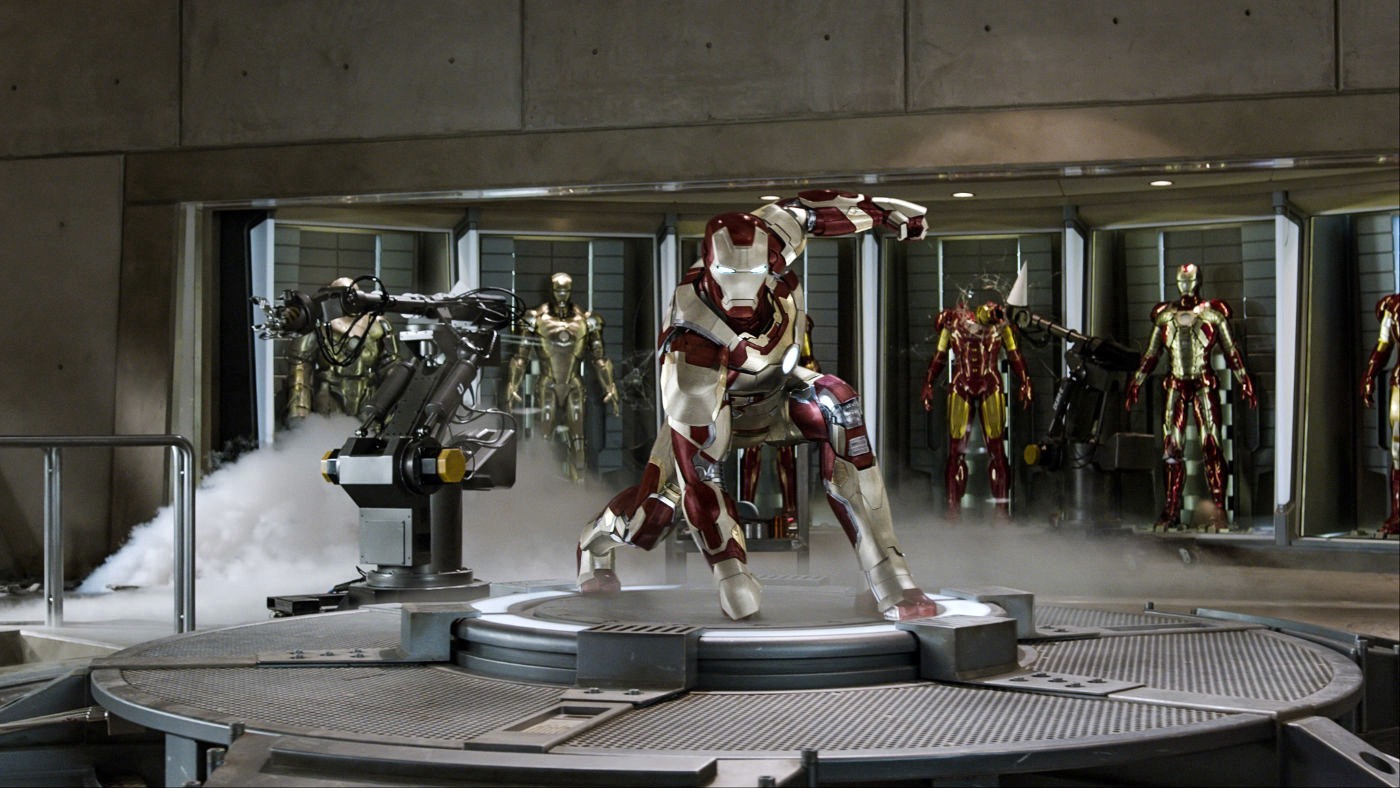
"Iron Man 3" Avoids the Usual Third Part Problems of Film Series


Third installments are very hard to do.  So hard, especially in film, that the third part of a film series is often the worst by far.  Some run into the problem of being overstuffed with ideas and characters and therefore can't muster a coherent narrative (also known as: The Spiderman 3 Syndrome).  Meanwhile, films like The Dark Knight Rises are simply plagued by having to follow the legacy of previous installments.  Iron Man 3 doesn't have to live up to Iron Man 2, which is much better than the power of internet hyperbole has led people to believe, but still riddled with problems.  No, the real film that the third installment in this series has to live up to is The Avengers, which was a satisfying culmination of years of Marvel bricklaying.  Iron Man 3 is no Avengers, but it manages to be a success by scaling back the latter's scope but not its capacity for adventure.

Continuing its trend of hiring cult writers/directors to man these large summer blockbusters, Marvel decided to hire Shane Black to head up this film.  Kiss Kiss Bang Bang is one of my favorite movies of all-time and Black's famous Lethal Weapon work made him the perfect candidate to handle such a zippy action film.  For those in fear of such a big production dulling an artist with a signature style, the film is replete with Black-isms: a Christmas setting, the buddy-cop bantering between Stark and Rhodes, book-ending narration, and a sequence that takes places in a boatyard.  He's also certainly much better at directing action than Jon Favreau ever was.  Iron Man and Iron Man 2 are both solid films, but their action sequences never seemed to reach the full potential of the character, particularly in their respective anticlimactic final battles.  Black, on the other hand, fully realizes the inherent "coolness" of Iron Man and is able to stage setpieces that are smartly constructed and visually satisfying.  There are big CGI-heavy scenes, but Iron Man 3 truly sings when it focuses on smaller scale battles, which play into the underlying theme of the film showing just how capable Tony Stark is without the famous suit.

Where Iron Man 2 was burdened by its connection to The Avengers, trying to tell its own story while building up a larger narrative and occasionally faltering, Iron Man 3 is helped by its ties to The Avengers.  Instead of trying to introduce its own internal conflict, the film wisely uses the fallout from The Avengers as an arc for Tony Stark.  However, the emotional material works on an intellectual level, but it doesn't always work on the screen, especially when stuffed between all of the comedic scenes that fill the rest of the movie.  Fortunately, these comedic bits work much more often than they don't.  Hollywood summer blockbusters frequently attempt to fit comic relief in between the action and fail miserably (see: the Transformers series), but perhaps unsurprisingly, the script in this one is pretty funny.  It takes a while to get started, but right as the second half hits, the film becomes a rollicking good time.

Iron Man 3 threatens to fall apart at any moment with all of the elements it introduces.  There's a Classic Cute Kid, the bane of every film series' existence, and your initial impulse will be to groan when he shows up.  Once the plot kicks into high gear, the multiple moving pieces cause things to get a bit claustrophobic.  There are a ton of great character actors in the movie, and while some make the most of their supporting roles (James Badge Dale!), others are wasted (Rebecca Hall!).  Luckily, the film rides on Shane Black's relentless forward momentum, and any minor quibbles are quickly forgotten as soon as the next setpiece comes along.

The series has never deeply prodded at its modern world implications, but it deserves kudos for even touching upon them in the first place.  Iron Man exists in a world full of self-interested billionaires and tenuous foreign politics, and it's not hard to make real life parallels.  Even though the series is likely to suffer from fatigue if it goes on any longer, the film plants interesting seeds for the future.  Iron Man 3 comes with the inherent dubiousness of any third part of a film series, but it winds up being the best installment nonetheless.