Saturday, March 30, 2013

The Party's Crashing Us: Spring Breakers Explores the Glamor and Horror of Youth


Magic Mike was one of my favorite films of 2012, mostly because it's just a genuinely good film, but also because of the trick that it managed to pull off.  When it was released last summer, it was a huge box office success, totaling a gross of almost $40 million in the first weekend.  The cause of this is not hard to see -- audiences flocked to see what was marketed as "that Channing Tatum stripper movie."  There's certainly some quality Channing Tatum stripping in the movie, sure, but mostly people got roped into seeing what is very much a Steven Soderbergh film.  Beyond all that male eye candy lies a talky movie with odd lens filters and shot compositions that's essentially a very cold and clinical breakdown of the state of the American economy.

Harmony Korine's latest curiosity, Spring Breakers, attempts to pull off the same feat and more or less succeeds.  Starring former Disney darlings Selena Gomez and Vanessa Hudgens, along with Pretty Little Liars actress Ashley Benson, the film was bound to catch the eye of young audiences from the get-go.  However, the idea of seeing these "good girls go bad" was enough to make the buzz surrounding the film reach an enormous swirl, and early box office averages seem to prove that the marketing was successful.  Over the course of the past few weeks, the anticipation has built up to the point where the release was like an event for anyone between the ages of 16 and 25.  Despite the fact that many people expected to get a pretty straightforward film about young people partying in the vein of Project X, what they got was a Harmony Korine film; one that eschews a conventional narrative, features patchwork editing, and has a pretty grim worldview.

In a landscape where The Hunger Games rules the world and Tom Cruise's upcoming live-action Wall-E remake is bound to pull in big numbers, Spring Breakers might just be the most apocalyptic film of the last 10 years.  The film offers up a literalization of the concept of the "teenage wasteland," where everyone is driven by their id-like desires to party and make money.  Allusions to the golden age of MTV's Spring Break specials and old Britney Spears songs abound, and the film is so drenched in the idea of 90s culture that it almost seems to be an examination of a generation as a whole.  It might not be Korine's goal, but the film makes a great case for the argument that the world is screwed if this is our future.  Characters hurt others and make terrible decisions with very little regard for the consequences of their actions, as if life is just some video game.  Everything is underscored with a foreboding tone, indicating that there is no floor to this downward spiral of moral depravity.

Straight from the opening of the film you know that you're in for a treat.  Spring Breakers puts all of its debauchery out on the table with a beach sequence that is vivid and lurid and loud, and the rest of the film follows suit.  In fact, the entire first half of the film feels like a giant music video, with its rapid editing and unrelenting soundtrack jumping from beach to backstreet with an effortless fluidity.  Korine manages to employ impressively economical storytelling, using these little snapshots of scenes to construct the story.  Dialogue is used sparingly, only a sentence or two is needed to serve as transitions from one sequence of images to the next, and the audience is left to fill in the small gaps on their own.  This method works because of the way that scenes spiral and circle back on each other, wandering lazily like the central youths do.

Even if the storytelling in the first half is a bit too lax for some, the film is simply gorgeous and likely to hold everyone's attention.  Tampa during Spring Break is depicted as being all neon lights, smoky interiors, and street-lit nights; a believable paradise for these four girls looking to escape the collegiate hell they exist in.  Visually, the film's style is used in a smart way, constantly juxtaposing glitzy surfaces with grimy underbellies.  The girls are drawn to the allure of Spring Break's promise of nonstop booze and drugs, but they slowly stumble into a darker corner of this world.  Adding to the ominous nature of the film are the constant gunshot sound effects that appear during scenes and the cuts from a current high to a later comedown.  Whatever happens next, we know that it won't be good.

The introduction of James Franco is both a gift and a curse to Spring Breakers.  On one hand, Franco disappears into his role, giving a riveting and entertaining performance as Alien, a larger-than-life rapper/drug dealer.  He's ostentatious in a cartoonish way, while also managing to retain a sense of danger.  Unfortunately, with his character comes the narrative drive of the film.  As it begins to have more of a concrete story, Spring Breakers loses a bit of its magic.  It's easy to deal with these thin characters and their flimsier motivations when the film is just an odd little worm, undulating around with no real destination.  Once the film has an actual goal, those elements become harder to overlook and the film falters a bit.

This is most problematic when it comes to Selena Gomez's Faith, the slightly purer goody-two-shoes of the group.  During the first half, her archetype seems like a perfect fit to this glossy puzzle -- the innocent who slowly succumbs to the pull of a debased world.  When the plot kicks in, her character starts to seem lazily-written and derivative.  Korine expects us to recognize the cliche and roll with it, but the thin characterization makes her feel like she exists solely to fulfill a given arc, as opposed to vice versa.  It's a shame too, because Gomez is pretty fantastic in the film.  Granted, she gets the most heavy lifting out of the four lead actresses, but she imbues her character with such humanity that it's almost enough to forgive some of the weak writing.

Recognizing the grimness of the world it's depicting, Spring Breakers actually begins to take on the structure of a horror film.  What could have been an interesting direction ultimately isn't fully explored, as the film zigzags to a truly bizarre ending.  Without spoiling it, the conclusion of the film works thematically if you try hard enough to make it work, but it still stretches the boundaries of believability that have already been established.  Mostly though, it's just kind of goofy.  However, those faults aren't enough to make me think that Spring Breakers is anything other than a wild success.  It's an odd beauty that is unlike any wide release you'll see all year.  Although it may not always work as a film, it's definitely a fascinating experience.

Sunday, March 24, 2013

Girls Concludes a Messy, Complicated Season With a Messy and Complicated Finale


It feels like everybody watches Girls for slightly different reasons.  Some watch it to get a laugh, finding the show to be a comedy about the misguided lives of 20-somethings living in New York.  Some watch it just for the nudity and raunchy sex, as if there aren't a million places on the internet where you can find that.  There are those that watch it for the well-observed character drama, and even those people can be split into subgroups.  Half of them might be able to relate to the struggles that the characters are going through, while others may watch from week to week wondering just when these spoiled, narrow-minded upper class people will just get a grip already.

Even though it took a few episodes to nail the tone down, season 1 of Girls managed to maintain a great balance of all its elements, which was probably why it was able to gain such a wide variety of acolytes.  One week you'd get an episode like "The Return," a meditative episode that delved into Hannah's life back at home, and then the very next week the show would drop something like "Welcome to Bushwick aka The Crackcident," which was 30 minutes of pure comedy.  Season 2 shifted the weights of its various tones and I wouldn't be surprised if it lost some fans in the process.  It was messy and complicated and by the end I was marveling at just how dark things became.  Surely, this wasn't the Girls that the people who tune in for the weekly sex scene bargained for.

Yet, for all its structural looseness, I can't help but be more enamored by this second season than I was by its first.  Part of this is because of how much deeper the show began to look inward and explore its characters this year.  If season 1 was about chronicling the relatively unchecked lives of 20-somethings with myopic worldviews, then season 2 was largely about those same characters being forced to examine themselves and their actions.  This season wasn't just about Hannah either, it gave the other 3 girls much meatier stories, and if the show lost some narrative tightness because of that, it gained back tenfold in thematic connectivity.  Hannah, Marnie, Shoshanna, and Jessa interacted with each other much less than they did in season 1, which made the fact that they all were struggling to obtain some direction in their lives even more poignant.

It's ironic then that season 2's 4th episode, "It's a Shame About Ray," was the installment that kicked off the show's great creative stretch.  Perhaps the last episode to put everybody together, "It's a Shame About Ray," let all of the characters play off each other and slowly showed things come to a boil.  What followed was a string of great episodes that are notable for just how different they feel.  "One Man's Trash" and "Video Games" couldn't feel less alike, but they both are incredible half hours.  For a while, Girls ascended to an "art" status, where it just didn't feel like anything else being produced on television.  In that way, it reminded me of season 5 of Mad Men.  Now let's be clear, this season of Girls is nowhere near being as good as the most recent season of Mad Men, which belongs in the pantheon of all-time great seasons of television.  However, I often remarked how season 5 of Mad Men felt like Matt Weiner was just doing whatever he wanted and letting the story follow.  Nobody would confuse "Signal 30" with "Far Away Places," but they're each their own little masterpieces.  Lena Dunham also seemed less interested in the common conventions of television and instead told each story in whatever way she found to be interesting that week.  It resulted in sometimes frustrating, but often fascinating television.

Everything culminated in "On All Fours," the penultimate episode, which was one of the most uncomfortable viewing experiences I've ever had.  Taking cringe drama to a new level, "On All Fours" showed everyone at their lowest lows, a rock bottom that was at once inevitable in its occurrence and surprising in its depth.  With the way everything was building up, we were being primed for some kind of catharsis in the finale.  Well, what we got was...something.  For the first two-thirds of the episode, "Together" looked to be snaking down the same dark hole that the other nine episodes slowly were, only to end on a complete turnaround into sweeping romantic territory.  This caused much consternation with many people who were fans of the show.  They wanted to see Hannah and the gang wriggle off on dry land after drowning in the depths of their own despair for so long, but not in a way that felt out of the blue and unearned.

It was only in the second viewing that I was able to confirm what I already had a sneaking suspicion of when I watched the finale for the first time.  "Together" reveals alot of information through its clever editing, which constantly links these characters who've been so disparate all year by choosing how to cut scenes together.  Where the meaning of a scene may be a bit opaque in isolation, it becomes completely clear when paired with similar scenes featuring different characters.  We see it in the very beginning where three awkward sex scenes are shown one after another, indicating that nothing good will come of any of these pairings.  It's a neat little trick really, allowing for a wonderful build that feels like emotional dominoes crashing down.  The technique is employed again in a series of knockout scenes, Shoshanna's breakup with Ray and Hannah's voicemail message to Jessa, where simmering emotions finally explode.

What follows is where people begin to have problems, with Adam running across town to find Hannah and Charlie and Marnie choosing to be together.  If those moments felt off, like something out of a crowd-pleasing romantic comedy, it's only because they were supposed to.  Girls has always been about being aware of something in its characters that they don't see within themselves.  So when Charlie and Marnie think that they've finally worked things out between each other and Adam "rescues" Hannah from herself, with swelling strings scoring both scenes, we're supposed to not buy what we're seeing.  It's an unhappy happy ending of sorts, informed by everything we've seen before to indicate that things most likely won't end well.  The show has never been about finding that one person to save you and make you feel whole.  Instead, it's about having this small subset of people who are the only ones willing to put up with you and make you feel just a little less broken, and that idea was reinforced in the finale.  It's there in Shoshanna and Ray's relationship, it's there in Hannah's phone call to Jessa, it's everywhere.

A recurring element of this season has been people calling others out on their crap, demanding for them to get their act together.  Everyone wants the next person to pull themselves out of the ground, but nobody realizes that they're saying it while their own head is only just crowning above the soil.  "Together" brings the gang closer to a point of clarity, while also showing that there are miles to go before everything will be fully okay.

Saturday, March 23, 2013

Looking Back on Ben & Kate


In terms of new quality comedy, the fall 2012 season didn't exactly set the world on fire.  Most networks bet on one horse when it came to what type of comedy they wanted to produce and they didn't stray outside of that zone.  NBC decided to go considerably broad, debuting shows such as the extremely bland Go On and the extremely goofy Animal Hospital.  Elsewhere on the tube, ABC looked to bolster their family block with the odd, but supposedly not terrible The Neighbors.  Meanwhile, CBS was being CBS, only this time failing with Partners and Made in Jersey.  Only Fox's two freshman comedies, The Mindy Project and Ben & Kate, appeared to be trying anything interesting last year.

The Mindy Project, with its more popular lead and higher critical and marketing buzz, seemed poised to become network tv's next big hit.  Unfortunately, the show was bogged down by constant casting changes, messy storytelling, and lower-than-expected ratings.  On the other hand, there was Ben & Kate, which was equally low-rated but much more confident in its voice.  While I initially despised The Mindy Project in the nascent days of the fall TV season, I found Ben & Kate to be charming and winsome straight from the get-go.  Even the best comedies have slow starts.  Seinfeld, Parks & Recreation, The Office, 30 Rock; they all showed rough edges in their beginning stages before smoothing things out to reach the classic status, that version of the show that we all remember.  That's what made Ben & Kate so impressive -- it was one of the strongest starts for a comedy in recent memory, up there with the likes of Arrested Development and Modern Family (which sadly stopped being good a long time ago).  If you weren't a fan of the show's voice, then it was unlikely to ever hook you, but I just loved rolling with the rhythms that creator Dana Fox and her writing staff created.

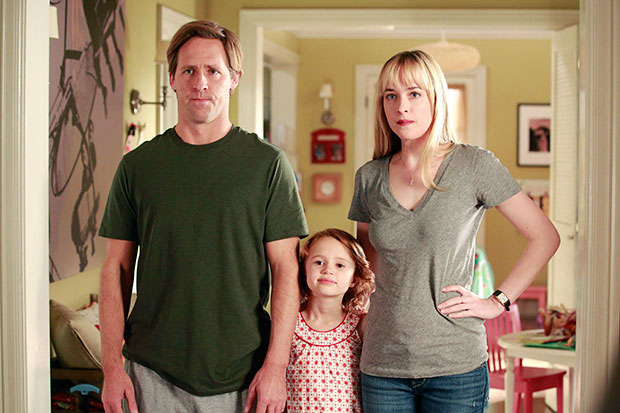
Some might read the premise of Ben & Kate or watch a scene or two and think, "Who needs another hangout comedy?  How is this one any different"?  Hangout comedies tend to allow for more character development, which is why I've always preferred them to pure joke machines.  As far as I'm concerned, there can never be too many hangout comedies when you can have so many different kinds of character combinations.  Ben & Kate didn't exactly reinvent the wheel for the genre, it just created great material within the constructs of the hangout comedy.  Because of its strong cast, who had an easy chemistry with one another, scenes had such a loose improvised feel.  Most of the funniest bits felt like casual, off-the-cuff remarks that were thrown in on the last take.  Even when the show wasn't at its funniest, it was just so much fun to watch the characters do their thing.  The show also contained some of the warmest, most organic interactions on television.  Ben and Kate Fox felt like real siblings, the kind that may get competitive from time to time, but ultimately love and support each other.  It was in the titular relationship that the show was able to create such a great balance between comedy and emotional beats.  Unlike latter-season Modern Family and The Office, the emotional material on Ben & Kate never felt forced, mostly because of how well Nat Faxon and Dakota Johnson always nailed the sappy stuff.  Sometimes, episodes would end on genuinely heartwarming and goosebump-inducing moments that would just floor you with their surprising effectiveness (see: "21st Birthday" and "The Trip").

I tend to fall in line with the general critical consensus when it comes to TV shows, but Ben & Kate was one of the few on which I was out of sync with critics.  Even those who liked it weren't particularly enthusiastic about it.  Most wrote it off as "light, pleasant fun with little substance to it."  Others went as far as saying that the show doled out the same joke types, emotional beats, and generic sitcom plots.  The most baffling criticism is when people said that they didn't laugh at all at the show, yet they laughed at The Mindy Project.  I'll be the first to admit that the plotting was generally weak, relying far too much on Ben and Kate having some kind of sibling competition in the early going and too much on Kate constantly needing her status as a mother to be reaffirmed late in the first season's run.  However, I tend to think that the internet overrates plot, especially in comedy.  If I laugh at a show and it makes me happy -- and I can't stress enough just how darn happy this show made me -- then that's usually satisfaction enough.

By the time the end of 2012 rolled around, the show landed at #3 on Favorite TV Shows of the Year list, but its cancellation looked to be imminent.  Ratings were low and not very stable and Fox seemed more invested in The Mindy Project.  When the show was officially cancelled in late January, I wasn't shocked, but I was still devastated that such a promising show wouldn't live to see a second season, or even a completed first.  As the months passed, however, I found myself surprised by just how little I missed Ben & Kate.  Part of this was because the 2013 episodes were the weakest of the season and it certainly didn't help that I now had higher expectations after such a strong 2012.  Another reason could be that I also caught up on New Girl, a show that began to fill the same slot in my heart that Ben & Kate did, while also revealing some of the weaknesses of the latter.  Was it best that Ben & Kate ended when it did, before it began to stagnate?

If the 3 yet-to-be-aired-in-the-US episodes that recently surfaced on the internet are any indication, then Ben & Kate was definitely taken from us far too soon.  These installments breathe new life into a show that I briefly feared might have shown all it had to offer, delivering tons of laughs on top of a characteristically strong emotional core.  By introducing Kate and Ben's father, the show is able to explore their dynamic and help the audience understand just why they're so dependent on each other.  What's more is that their relationship with their father is a wonderfully nuanced one.  He isn't cartoonishly absent and heartless, just aloof.  Throughout his mini-arc, you can see just how much Kate and Ben long for his attention and affection, even as adults.  These new episodes also show that the writers weren't afraid of moving the plot forward.  Without getting too spoilery, the four main characters each find themselves in a different place in life by the end of the three episodes.  It's certainly a shame that we won't be able to see where the threads set up in episode 16 would have eventually led to, but the show ends on a touching note that feels satisfying nonetheless.

RIP Ben & Kate (2012-2013)

Thursday, March 21, 2013

The Canon #1: (500) Days of Summer (2009)


The Canon is a recurring feature where I look back on movies, tv episodes, albums, books, etc. that I love; inducting them into my own imaginary canon of all-time favorite things.  (Inspired by the now-defunct podcast, Extra Hot Great)

It's funny how time works, constantly re-informing the way we think about life as it progresses.  You may feel one way about something and then look at it in a completely different way just a year later.  When I first saw (500) Days of Summer in 2009, I absolutely loved it and eventually it ended up being my second or third favorite film of that year.  Since then, I hadn't rewatched it, and a part of me worried that I wouldn't like it as much as I did when I first saw it.  I worried that what 17 year old me found to be genuine emotion and insight lying under a thin layer of twee, might seem like a bit of inspiration completely obscured by a thicket of cloying cuteness to 21 year old me.

Fortunately, four years haven't done much to change my views on this wonderful little film that's all about the flaws in our perception when it comes to relationships.  Marc Webb's playful directorial touch in lockstep with Scott Neustadter and Michael H. Weber's charming script effortlessly convey the complexities of male-female interactions.  No matter how old you are or what your circumstances may be, there is probably something that you will be able to relate to in (500) Days of Summer.  Some of the scenes are so well-observed that they feel achingly real, even if they don't fall in line with your own history.  Falling in love is full of generalities, yet we all feel them with such an intense specificity, and the film's greatest strength is its ability to capture that very abstract idea.

The film's narrative is built on this nifty little trick, where the scenes are a nonlinear collection of days that chronicle the relationship between Joseph Gordon-Levitt and Zooey Deschanel.  But this concept is not just a gimmick; it's used to tell the story in a way that's even more powerful than following it from start to finish.  Scenes that happen later in the relationship sometimes play right before a scene that happens early in the relationship and vice versa.  Something as small as Levitt making a joke and Deschanel not responding will be informed by the proceeding scene, where they make the same joke and are blissfully content earlier in the relationship.  With this constant temporal shifting and pastiche of film styles, the film feels less like a journey through the rise and fall of the love between two people and more like whirling fragments of exuberance and heartbreak.

Initially, it seems as if (500) Days of Summer portrays the relationship as an event of mythic proportions.  Narration is used to give this central romance a storybook feel, as if every moment of existence has been leading up to their pairing.  Upon further examination, though, the film is actually a takedown of the concept of all-consuming love.  As much as we would like to think so, the "dream girl" just doesn't exist, and treating women as objects is ultimately destructive.  That's why the famous Expectation vs. Reality scene is so fantastic -- it shatters all of the fantasies that Levitt has and reveals just how much of what we've seen has been his internal perception.  The film stumbles a bit with the little sister character (played by Chloe Moretz) and its overly-neat ending, which both try to underline the film's themes and overdo it.  But when it's just letting the story organically show how much the initial rush of infatuation may blind us to what's really going on, it's about as thoughtful and emotionally affecting as anything I've ever seen.

Sunday, March 17, 2013

The Americans and First Seasons of Television


When I think about my favorite dramas of all time, it's rare that my favorite season is the first one.  Part of it is a personal thing, where I tend to find later seasons of shows more compelling because of my familiarity with the characters, even if the earlier seasons may be better in terms of writing and plot (prime example: I'm the only person in the world who favors season 2 of Downton Abbey to season 1).  Another reason is that, much like I pointed out with comedies in a previous post, dramas take a little bit of time to figure things out.  With comedies, however, it's more about giving the time to let the cast gel together and for the writers to find what is and isn't funny and tweak accordingly.  The slow start that dramas often face is more of a structural problem.  Despite the fact that it may not be the way that you or I consume television, shows are built upon the idea that viewers may not be tuning in every week or paying attention to every detail.

This is where the battle of serialization vs. procedural comes in.  How much serialization is too much at the outset?  If you have an overly serialized narrative right from the beginning, it's possible that the average viewer will be lost and never come back.  On the other hand, starting out with full-on procedural episodes will cause viewers like myself to get bored and drop the show.  Usually, a mix of the two elements is what new shows go for, and the difference is how each show goes about balancing the two.  There's the method that Joss Whedon seems to be fond of, where he starts out very procedural and sneaks a serialized narrative on you so subtly that you don't even notice.  Then there's the X-Files and Fringe model.  Both shows, the latter especially, became more serialized as they went along, but they still followed the format of switching between mythology-heavy episodes and monster/case-of-the-week episodes.

The Americans, FX's latest show about a couple of Soviets spies in the 1980s, is in the process of crafting one of the strongest debut seasons of a drama that I've seen in recent years, partially because of how effectively they've been managing to balance the serialized narrative and the weekly procedural stories.  Every episode has a singular objective, but these weekly missions or scenarios act as pieces that fit together to build towards moving the larger story forward.  This is an example of why I prefer the FX/AMC model of storytelling to HBO's model.  A show like Breaking Bad is heavily serialized, but it's also really good at making every episode have a clear beginning and end, a general goal that must be achieved.  On something like Game of Thrones or Boardwalk Empire, seasons are constructed like novels and each episode is merely chapter.  In the same way you're not going to remember what happened in chapter 13 of a book, you probably wouldn't be able to give an answer if somebody randomly decided to ask you what happened in the Game of Thrones episode "The Ghost of Harrenhal."  On the other hand, an episode like Mad Men's "Signal 30," which aired around the same time, is easy to remember because it can just be described as "the Pete Campbell short story episode."

Mad Men's episodes provide individual stories that differentiate themselves from one another while also contributing to the arc of the season, and The Americans is doing a similar thing in its construction of the season.  It'd be hard to confuse what happens in one episode with what happens in another because of the clearly delineated objectives in each, yet the show cleverly avoids feeling like a "mission of the week" show.  This is because every mission has direct implications for Elizabeth and Phillip and moves their relationship forward.  Strangely enough, the marriage/partnership between the two main characters is the serialized element of the show.  The state of their relationship is constantly shifting and reformulating, always being driven by the circumstances around them.

Having the show be as much about marriage as it is about being a spy is a really smart choice, allowing for there to be many parallels to be drawn between the two.  Marriage is built upon trust and honesty, two things that don't mesh well with being a spy.  The idea of two conflicting desires is one that drives many narratives, from Walter White's desire for power conflicting with his desire to protect his family to Amy Jellicoe's desire to be altruistic conflicting with her quest for revenge.  At its core, The Americans is about being caught between two poles.  Elizabeth and Philip's marriage is an arranged one, but over the course of their assignment there's a real affection that has grown between them.  They're devoted to each other, but they're also devoted to their duty and the goals of their nation.  "Which devotion is stronger?" looks to be the driving question of the season thus far, with the concept being literalized by introductions of Elizabeth and Phillip's past lovers.  There's been a constant building upon the theme of couples coming together and couples crumbling, as seen in the romantic troubles of Stan, an FBI agent and Elizabeth and Phillip's neighbor, who could cause problems for them in the near future.  "If all of these normal couples are falling apart," the show seems to be asking, "what chance do Liz and Phil stand"?  The decision that the two make at the end of last week's episode, to really put effort into making things work, is even more moving under the weight of this thematic portent.

If there's one flaw I could point out about the show, it's the "why now?" factor of it all.  Elizabeth and Phillip have been working undercover for 15 years, yet this discovery that they may have genuine feelings for each other is just happening now.  The alternating vulnerability and coldness that both Keri Russell and Matthew Rhys bring to their roles help make this easier to overlook; both of their killer performances just sell every moment and make anything believable.  As each episode progresses and is better than the last, I find that every element of The Americans is growing on me and being scratched into my soul.  I even like the opening credits, which many people seem to hate.  The blending of American and Soviet imagery until you can't tell what's what anymore is a great summary of a show that constantly asks just what is real and what is a cover. If The Americans continues its exponential improvement, it could quickly become one of my favorite shows on television.