Showing posts with label Whedon Week. Show all posts

Wednesday, September 25, 2013

Whedon Week: Marvel's Agents of S.H.I.E.L.D. Pilot Review


Well folks, the wait is finally over.  Whedon Week has come to a close, because the Marvel's Agents of S.H.I.E.L.D. pilot aired last night.  And with the conclusion of the waiting is the end of all the hopes and fears that came with it.  That period of anticipation was when the show could turn out to be anything.  At its worst, it could be a gigantic failure, detrimentally affected by its status as a TV show, and filled with corny instances of people saying "Oh hey, you just missed Tony Stark a few minutes ago..."  At its best, it could tap into the magic of Joss Whedon, perfectly melding comedy, drama, and action-adventure to tell the kind of small-scale stories that happen on the periphery of the Marvel world.  With just a pilot to go on, it's hard to tell which of the two options this show is, but I'd lean more towards the latter.

The first half of the episode is a slick introduction to the world and its characters, taking steps toward developing the kind of group that makes every other Joss Whedon show so strong.  Of course, the question on everybody's mind is "What's the deal with Agent Coulson"?  The pilot does a good job of providing an explanation for why he's alive after being stabbed to death by Loki in The Avengers, while also making it clear that there's a deeper mystery going on under the surface.  Whedon chooses to have two different characters be the entry-point into this world, which is an interesting, albeit slightly unnecessary choice.  Out of the two, Skye, the computer hacker, is definitely the more fun one.  Chloe Bennet fills what I call "The Dushku Role," offering up a heap of sass, but replacing edginess with and enjoyable effervescence.  On the other hand, there's Agent Ward, the stoic lone wolf of the group.  For now, both he and Agent Melinda May are mostly there for the action, and their characters are the least defined so far.  Meanwhile, Agent Simmons and Agent Fitz are the most Whedon-y of the bunch, and are the best as a result.  Over the course of the pilot, you get a complete sense of their dynamic, and the way they frenetically bounce off of each other is a real delight to watch.  The cast may not be as fully formed as those on other Whedon shows, but I can see them gelling together as the season progresses.

When Agents of S.H.I.E.L.D. was first announced, many people brought up Gotham Central, the DC comic about that focuses on the police officers in Gotham City, as a reference point.  It's an apt comparison to make since it focuses on S.H.I.E.L.D., the everyday heroes whose work gets overlooked in the midst of all the capes and cowls.  But it's also reminiscent of the Kurt Busiek comic, Astro City, in the way that it deals with the denizens of a city coming to grips with the existence of superheroes walking (and flying) among them.  It's an interesting expansion of the world we've only seen highlights of in the Marvel films.  And while there may be something hokey like a character saying "He's got the best spy score since Agent Romanov," there are also very cool nods to the movies, most notably the Extremis arc from Iron Man 3 coming into play.  Joss Whedon shows have always been instilled with a deep mistrust of authority, and Agents of S.H.I.E.L.D. takes his pet theme and turns it on its head, asking "what happens when you are the mistrusted authority"?

I've seen some complaints about the pilot, stating that it's too straightforward, and I'm willing to admit that the show feels a bit safe so far.  It's never more evident than in one of the final scenes, which teases a moment that feels like the kind of shocking and dark turn that Whedon is know for, only to reveal a rosier conclusion.  Still, I balk at the claim of the pilot lacking surprises when it features that terrific scene where Coulson injects Agent Ward with truth serum.  Aside from that, there are little moments of spark that come in the form of quippy lines and snappy direction throughout the episode.  The real concern is whether the show can ever truly develop a unique personality with so many cooks in the kitchen.  ABC has alot invested in this show's success, which leads to the kind of stifling network interference that ruins shows.  The behind the scenes rumors about script difficulties don't do much to dispel the fear that ABC isn't letting Whedon and his crew just be great.  For now though, let's put the worrying aside and enjoy this pilot, which is solid enough to hope that the show can blossom into something special.

Grade: B

Tuesday, September 24, 2013

Whedon Week: The top 30 episodes of Joss Whedon's shows


This was, by far, the hardest list to produce.  How do you narrow a total of 294 episodes down to a list of 30?  After a long and difficult ranking process, I finally was able to do it.  I wanted to try to have a well-distributed representation, or else it would mostly just be Buffy episodes, due to the fact that it's my favorite, and the nature of the show allowed for there to be more standouts.  So the order might be a little wonky, so as to not clog the top 10 with one show, and also because every episode here is so good that it doesn't matter whether something is 24 and another is 23.  I tend to have pretty different favorites from others (I love "Doublemeat Palace" -- that's all you need to know about me), so I imagine many Whedon fans would be pretty annoyed by this list, seeing as there are some big ones missing.  But overall, I'm pretty happy with it.


Monday, September 23, 2013

Whedon Week/The Canon #8: Dollhouse - "Belonging" (2009)


The Canon is a recurring feature where I look back on movies, tv episodes, albums, books, etc. that I love; inducting them into my own imaginary canon of all-time favorite things.  (Inspired by the podcast, Extra Hot Great)

There's an argument to be made for the goodness within the protagonists of almost every Joss Whedon show.  It's easiest for Buffy, which was always a show with a clear sense of right and wrong, and when characters did become evil, they were justly punished for it.  Characters on Angel, on the other hand, often questioned whether they were crossing the line between good and evil, before eventually being assured that they were not.  The crew on Firefly were outlaws, sure, but the lovable kind that you're supposed to root for.  Plus, they're outlaws from a government that's clearly seen as corrupt.  But the characters that run the titular organization on Whedon's most recent show, Dollhouse, are unequivocally people whose morals have been compromised.  Part of the reason why the first season episode, "Man on the Street," is seen as such a turning point for the show is because it's the first one that truly examines how the Dollhouse takes people's lives and identities, all in order to service lonely and predatory clients.

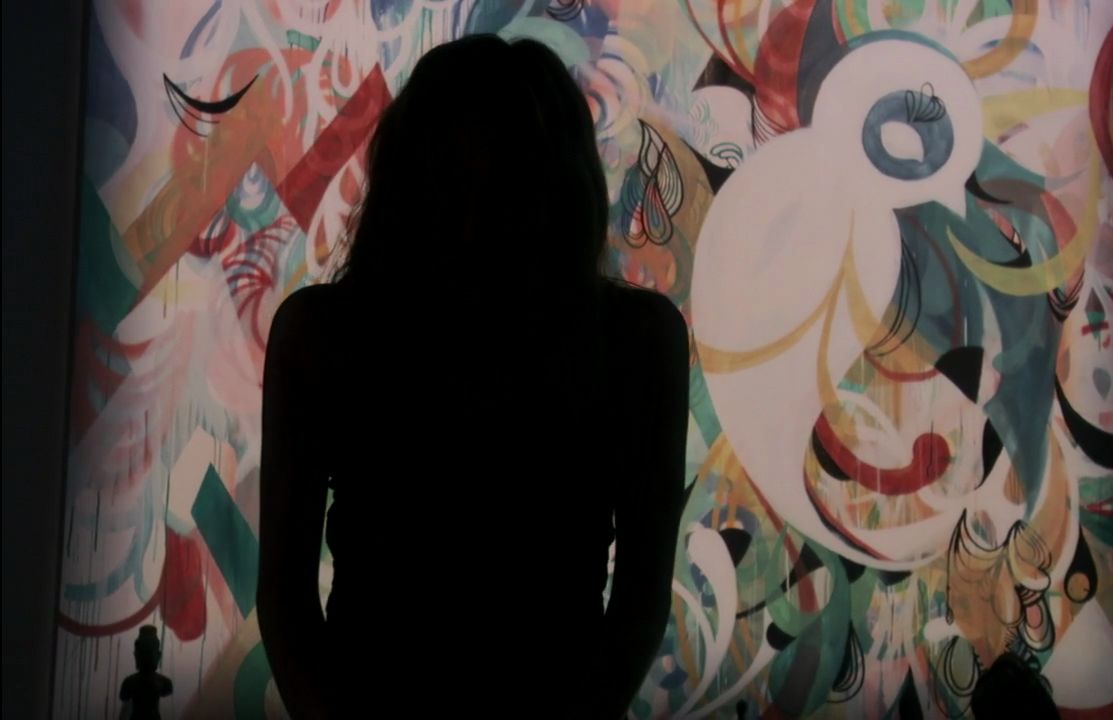
But no episode is better at exploring the deplorable nature of the Dollhouse than "Belonging," the fourth episode of the show's second season.  It starts off with flashbacks of Sierra, before her time in the Dollhouse, when she was just an artist named Priya.  Enter Nolan, one of the Dollhouse's biggest clients, who notices her artwork and tries to court her, only to have his advances rebuffed.  The episode does a great job of exploring power dynamics -- how the powerful use their considerable advantage over the powerless -- when Nolan resorts to seedier methods to win Priya over.  Once he has her in his sights there's nothing she can do, as Nolan drugs Priya so that she appears to be psychotic enough to be committed to the Dollhouse, and he can have her at any time.  Priya's paintings frequently featured birds, and at one point a character suggests that the birds are a metaphor for her -- free but unsure of where she's going.  But the real metaphor is that she's now a caged bird: trapped and only brought out when her master wants her.

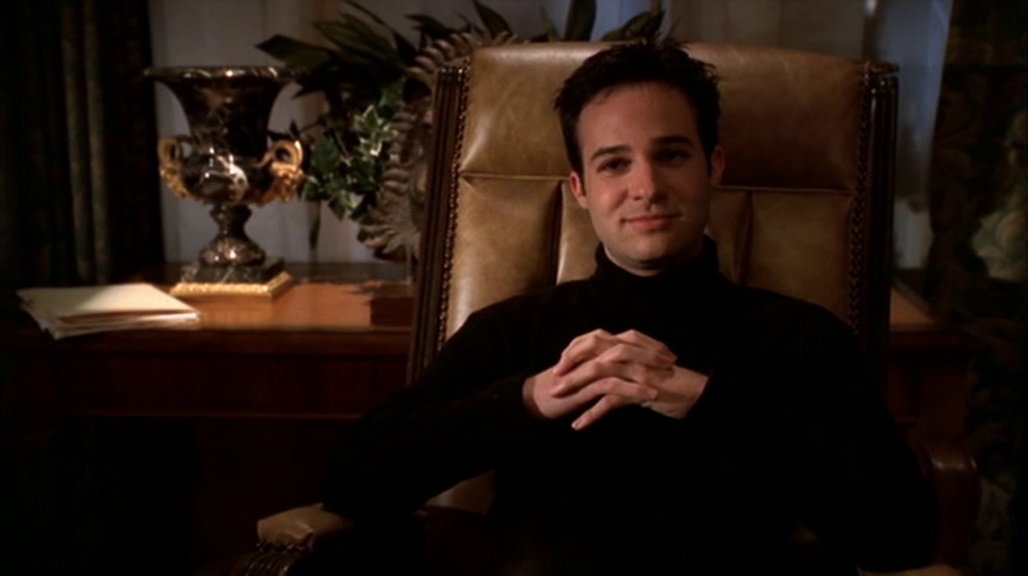
For as much as the episode is devoted to Priya/Sierra, it's equally a character piece for Topher.  One of the best decisions that the show made in season 2 was to introduce characters higher up on the chain of command at Rossum.  It gave the writers an opportunity for people like Adelle and Topher to have something to fight against, while never letting them off the hook.  If the show is all about exploring the moral blackness of what is essentially a high class prostitution ring, then season 2 is primarily interested in discovering where these characters draw the line, and clearly "Belonging" is the line for Topher.  Once Echo brings the unsettling artwork that Sierra has been doing to his attention, he begins to investigate, eventually discovering the true nature of Sierra's arrival at the Dollhouse.  It's a real turnaround for Topher, who had been previously depicted as an evil scientist who only thinks of the dolls as his experiments.  "I'm not the bad man," he says early in the episode, but when he's forced to face the collateral damage that his science has caused, he has to take a hard look at himself.  It's what causes him to unleash an altered Priya on Nolan, which results in Nolan's death.

There are many plots moving along at the periphery too, giving us more progress in the slowly building connective tissues in Echo's mind, Sierra and Victor's growing bond, and a glimpse into Victor's pre-Dollhouse past.  It's also thematically hefty to boot, examining and shattering the lies that these characters tell themselves to keep going.  For all of the talk that Adelle and Topher give about how what they're doing is helping people, they are still complicit in ruining Priya's life.  As we see in the scene where Victor has flashbacks to his time in the Middle East before becoming an Active, the Dollhouse only colors over the pain of the past; they don't erase it.  And in the process they've picked up some emotional scars too.  At the end of the day, Priya gets to forget the blood spilled, but Topher has to live with what they've been through every day.

Is this the darkest episode in the Whedonverse?  He's been known to get grim, but "Belonging" is pitch black.  I remember watching its original airing and being slack-jawed, amazed by the boldness of Sierra's tragic origins.  This the last episode before the intense serialization that follows in the 9 episodes that close out the series, and it sets them up well, hinting at the mistrust of authority that drives the explosive events to come.  At this point, the season is only just starting, but it never gets better than this episode, which reminds the audience and characters alike that the Dollhouse is a dirty business, and nobody's slate can ever truly be clean.

Whedon Week: I love season 6 of Buffy and here's why you should too


Although the order of preference may shift, there seems to be a general consensus when it comes to Buffy seasons.  Season 1 is rough compared to the others, the back half of season 2 is ridiculously good, season 3 is the most consistent, season 4 has the best standalones, season 5 contains "The Body" and "The Gift" which overrides anything else that happens in the rest of the season, and most people prefer not to speak of season 7.  But it's hard to get a gauge on how the fandom feels about season 6 as a whole.  There are some who hate it with a fiery passion, but then there are also some fervent defenders of it.  Season 6 isn't my favorite season of the show (my order would be: 5, 3, 6, 2, 4, 7, 1), but I'm in the fervent defender camp, because I absolutely adore it.

It seems like some people's thoughts on season 6 are colored by the narrative that it technically shouldn't have existed.  "The Gift," the season 5 finale, was so perfect of an ending that many people jokingly say "Buffy ended with 'The Gift'" and pretend that the last 2 seasons didn't happen.  Buffy had been killed off and The WB didn't want the show anymore, so many fans were already turned off by the idea of it continuing on UPN.  But to me, the show justifies its existence the moment it brings Buffy back to life at the beginning of season 6.  It's not so much the act itself -- once you know that the show is continuing and you figure that Buffy: the Vampire Slayer needs Buffy, it's pretty easy to then conclude that bringing her back will involve some sort of spell -- it's the implications that the act has.  From the brief bits we get of the Scooby Gang continuing their slaying without Buffy, it's clear to see that they're doing relatively fine, so bringing her back is something that they do because they miss their friend.  But what was done out of longing ended up being a really selfish act, when it's revealed that Buffy was in heaven and that she was actually happy.    I can't stress how much I love that moment in "After Life," when Buffy tells Spike about the true nature of her being brought back to life.  I think it's the boldest thing I've ever seen on television, and I remember my jaw dropping as I gasped and shouted "WHAT?!" once the gravity of the moment hit me.  After all of the struggling that we saw her go through in the 5th season, she was finally at peace, and then her friends ripped her out of Heaven, forcing her to return to everything she had escaped.  All of the responsibilities, all of the loss, all of the bills, all of the drudgery.  All of it.

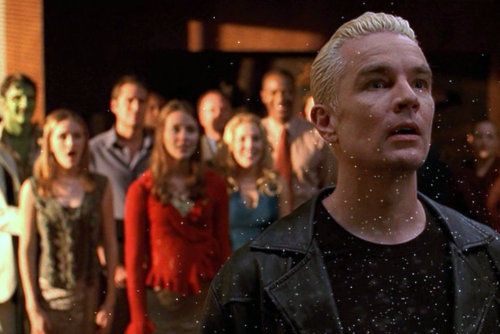
This reveal, and her determination to keep it from her friends, leads to alot of the resentment and listlessness she feels.  The beginning of season 6 is all about keeping secrets.  In fact, the first 7 episodes are an interesting little mini-arc to start off the season.  As we all know, this is a Joss Whedon show, and in Joss Whedon shows, the truth always comes out.  And it's unleashed in a big way, as everything finally stumbles out into the open in "Once More, with Feeling," an episode upon which every fan can agree.  It has the gimmick of being "the musical episode," but what's most impressive about it is just how much plot is stuffed in there.  Buffy's resentment about being ripped out of heaven, Willow using magic on Tara to make her forget their fighting, Anya and Xander's anxieties about their future, Buffy and Spike's budding romance, Giles feeling the need to let Buffy go -- all of those tensions clash together and explode near the end of the hour.  It's an episode so monumental, that the rest of the season is spent dealing with the fallout of the revelations that occur in it.

One of the big problems that people have with season 6 is its middle section.  After "Once More, with Feeling" it's hard for anything afterward to not feel like a disappointment, and on my initial run through the series, I do remember feeling like the middle sagged a bit.  But looking back, there are actually only three episodes that I don't like.  I hate "Smashed" and "Wrecked," and I was never into Riley and therefore wasn't big on his return in "As You Were," but aside from those, there's some strong stuff in there.  I know I'm the only one who feels this way, but I love "Doublemeat Palace," so that, "Dead Things," and "Older and Far Away" is just a killer 1-2-3 punch.  Listen, I think the Willow addiction metaphor is pretty weak, and the middle/end of the season takes a relationship I really adored in Spike and Buffy and sends it to very ugly places, but all of the good material elsewhere in the stretch outweighs those two problems.  Plus, I could argue that the Willow storyline is worth it, simply because of where it ends up, and that Buffy's self-sabotage is a natural reaction to the pain that she's feeling.

Honestly -- and pardon me for making a blanket statement -- I think that people who don't like season 6 of Buffy have never been really depressed.  I suffer from depression, and I watched the show while being at a particularly low point, so this season was some of the most raw and real television I've ever seen.  Buffy may come off as whiny and mopey to some, but to me it's one of the best depictions of clinical depression on television.  The unrelenting bleakness turns many people off -- and to be clear, it is an exhausting and unpleasant season to watch -- but when you're in a certain mindset it's easy to let the mood just envelope you.  Another big gripe that people have is that there's a tonal inconsistency to the season, complaining that the usual goofier standalones don't mesh very well with the dark tone of the season.  I call BS on that complaint too, as it displays a fundamental misunderstanding of depression.  I was recently having a conversation with a friend of mine about how miserable I am, and she responded, perhaps disbelievingly "but you never seem that way when I see you."  People who are depressed aren't incapable of happiness, and it's true that I'm quite a jocular person when I'm around others, but the season understands the nuance of the shifting emotions that come with mental illness.  So episodes like "Gone," "Doublemeat Palace," and "Tabula Rasa" work for me in the midst of all the emotional turmoil.

Season 6 of Buffy puts every character through the grinder and by the end, you feel like you've been on a long, grueling journey with them.  So when Xander talks Willow down at the edge of that cliff or when Buffy climbs out of that ditch her and Dawn got stuck in -- LITERALLY CLIMBING OUT OF HER STATE OF DESPAIR -- it's so freaking cathartic and oh my god I can't take it.  There's so much pain in these episodes: the pain of losing a loved one, the pain of clinical depression, the pain of being betrayed, the pain of growing up and realizing that life isn't going to turn out like you hoped and dreamed it would.  If you can't find the beauty in that, then I don't know what to tell you.

Sunday, September 22, 2013

Whedon Week/The Canon #7: Firefly - "Out of Gas" (2002)


The Canon is a recurring feature where I look back on movies, tv episodes, albums, books, etc. that I love; inducting them into my own imaginary canon of all-time favorite things.  (Inspired by the podcast, Extra Hot Great)

For all of the supernatural and science-fiction plotting that appears in Joss Whedon shows, they are, at their core, primarily relationship-based.  The dynamic between the entire crew of the Serenity is one of my favorite things about Firefly, but there are smaller relationships that play out over the show's limited run too.  There's Zoe and Wash, the married couple who seem unlikely at first, but whose rhythm feels like the product of years together.  There's River and Simon, the brother and sister who've bonded over the tough circumstances they've both faced.  But one of the most interesting of these -- and one that may not readily come to mind -- is the one between Mal and the Serenity itself.  Malcolm Reynolds almost functions as a post-hero -- a man who is aware of the existence of heroes in stories and is attempting to be one himself.  He tries his hardest to have the steeliest resolve and the wittiest rejoinders, all with a certain level of self-awareness.  And if he is the post-hero, then the Serenity is his post-sidekick.  "Out of Gas" is a remarkable episode for many reasons, but especially because of how much it fleshes out Mal's relationship with his beloved ship.

The episode is written by Whedon cadet Tim Minear, who is the master of the flashback, a technique that is employed throughout the course of the hour.  "Out of Gas" opens near the end, with Mal collapsing on the floor of the ship, blood dripping from his abdomen, before cutting to an earlier point in the story.  Minear layers on the flashbacks, alternating between the present (Mal's bloody amble through the ship), the past (how he got into this situation), and the distant past (his first meeting with the rest of the crew), and keeps things from getting messy due to some slick editing.  There's a bit of symmetry between the cuts, as one scene in the present directly informs the jumping off point for a flashback.  The episode shows the events that led up to these people originally coming together, highlighting how inextricably linked they are.  Like all protagonists in a Joss Whedon show, they have a bit of a familial bond.

Of course, we soon learn that the cause of this sticky situation is an explosion that happens on the ship, brought about by a broken part that Kaylee told Mal needed fixing way back in the pilot.  Conditions are dire -- there is no spare part, Zoe was knocked unconscious by the explosion, and they only have a few hours of oxygen left.  The deterioration of the ship causes a breakdown within the crew, as Mal and Wash become embroiled in brief squabbling over what to do, and some of the others panic in the face of their impending deaths.  Usually, this would be an easy bit of symbolism, but the ties between these people and their ship are so tangled that it feels organic and logical for this crisis to have such fractious results.  The deepest investment in the state of the ship comes from Mal, who eventually sacrifices himself by staying on the ship and sending everybody else off on shuttles to try to find safety.

There certainly are episodes of Firefly that are funnier ("Our Mrs. Reynolds," my personal favorite), more exciting ("Ariel"), or brainier ("Objects in Space").  The thing about "Out of Gas," though is that it's the episode that's most essential to understanding the heart of the show.  The Serenity is the thing that unites all of these disparate people, and like the catalizer that initially causes the explosion on the ship, Mal is the component that keeps things running.  Yet, in the end, it's not Mal getting the new catalizer into place that saves the ship -- it's the rest of the crew coming back to him after Zoe regains consciousness.  As much as "Out of Gas" is about a man and his ship, it's also about those other people who make his time on that ship so much more enjoyable.

Whedon Week: Ranking the Joss Whedon deaths


Whedon is nothing if not a master of death, truly believing that there are no happy endings in life and that nobody is safe.  While researching this list, it really hit me just how many major characters die in his work.  What's worse is that it usually happens right when that person finds some sort of peace and happiness in their lives.  Although The Whedon Death may be sudden, they often come with a great deal of emotional weight.  I tried to include every death that seemed relatively important, but I'm sure I've missed a few (seriously, there are so many deaths!).  My criteria for these rankings is a mixture of how well-executed I thought a given death was and how much it specifically affected me.  Obviously, there are many plot reveals in this list so:

MAJOR SPOILERS FOR EVERY JOSS WHEDON SHOW/MOVIE AFTER THE JUMP

Saturday, September 21, 2013

Whedon Week/The Canon #6: Angel - "Waiting in the Wings" (2002)


The Canon is a recurring feature where I look back on movies, tv episodes, albums, books, etc. that I love; inducting them into my own imaginary canon of all-time favorite things.  (Inspired by the podcast, Extra Hot Great)

Television writing is a very collaborative medium.  Although there are some writers; like Aaron Sorkin, David E. Kelley, and David Milch; who prefer to take up most of the scripting duties on their own, for the most part, the writing of episodes in a season is shared amongst a room of writers.  Creators and showrunners tend to only step in a few times per season, usually for the premiere, finale, and any other "big" episode in the middle of a season.  Before I started watching any Joss Whedon show, I was always aware of the reverence that people had for episodes that were written by him.  Look at any discussion of Buffy and you'll quickly see somebody say that all of the best episodes of that show were the ones written by Whedon.  Many of his episodes are the best of a given show, but even when they're not, the one mark of a Joss Whedon episode is that it "feels" different than the rest of the episodes.  In particular, they always feel very cinematic, an early indication of the huge directing career he'd eventually have.  While a number of them can be described as "gimmick episodes," a script credited to Joss always manages to be interesting and high-concept, while also packing in so much story and character, moving things forward substantially.  In that case, "Waiting in the Wings," the 13th episode of the 3rd season of Angel, is a textbook Joss Whedon episode.

One of the dominant themes in all of Joss Whedon's work is that he loves to explore the inner-workings that exist within a large group of people.  Where the Scooby Gang on Buffy functioned much like a makeshift family, the Angel Investigations crew on Angel had the rhythms of a tight-knit workplace.  As is the case with all workplaces, whenever you spend all that time together, relationships are bound to develop.  By the time "Waiting in the Wings" rolls around, the crew is right at the point of combustion with all of the relationships that have been bubbling under the surface.  There are so many layers of romantic entanglement going on in the middle of season 3 -- Angel likes Cordelia, Cordelia likes Angel, Gunn likes Fred, Wesley likes Fred, Fred likes Gunn, Cordelia thinks that Fred likes Wesley -- and Whedon understands the tension that comes from characters not saying what they truly feel.  Stories come to a climax in his shows when everything finally boils over and the truth reveals itself.  When Angel gets tickets to a ballet show and the group gets all dressed up to go together, passions run high, and it's pretty clear that the furtive nature of these affections will soon come to an end.

But in true Whedon fashion, things get much stranger from there.  Angel quickly realizes that the dancers that they're watching on stage are the same ones from the last time he saw the show...but the problem is that that was over a hundred years ago.  Seeing that something fishy is going on, he and Cordelia go to investigate, and they find themselves backstage in an endless hallway where there is no exit.  Adding to the mystery of this ballet company is a room where they begin to feel the feelings and thoughts of people from long ago.  The scene between Angel and Cordelia in this room is electrifying, serving as a bit of a redux of a scene at the end of the season 2 Buffy episode "I Only Have Eyes For You," but stretched out even longer.  What makes the villain plot in "Waiting in the Wings" so masterful is that this transference of emotions only serves to heighten what's already there.  Angel and Cordelia may be acting out the lust of former lovers, but it blends in with their own buried feelings and neither can hardly tell what's real.

As Angel and Cordelia find out from the room of transference, the leader of the ballet troupe loved one of the ballerinas, but his affections were unrequited, so he put a spell on everyone, forcing them to perform the same routine for eternity just so he can watch his love dance.  The intensity of love is a connective thread throughout every story in the episode -- once Fred, Wesley, and Gunn notice that Angel and Cordelia have been gone for a while, they decide to look into it, and their tensions only get intensified once they sneak backstage too.  The love triangle between the three of them is a classic bit of storytelling, and it plays out with all of the weight that comes with unrequited affections.  

But it all comes back to the ballet.  "Waiting in the Wings" is peppered with scenes of the trapped ballerina (Summer Glau, in a role that eventually got her cast on Firefly) performing onstage, adding to the graceful beauty of the episode.  And just like ballet, which communicates through opaque non-verbal movements, all of these characters are elegantly dancing around one another instead of confronting each other head on.  Love often renders the loved as nothing more than an object; they only exist as a performance on a stage for you to enjoy.  With such thinking, and a set-up as intricate as the Angel Investigation crew's, there could never be a solution where everyone wound up happy.  Although Fred and Gunn get to experience love as a two-person dance, Wesley is left the odd man out, and Angel's inaction leads him to losing Cordelia at the last second, as Groo returns from Pylea before the episode closes.

"Waiting in the Wings," doesn't receive the overwhelming praise that many other episodes written and directed by Joss Whedon do, and that could be caused by the fact that it feels like a bit of greatest hits collection of his more popular episodes.  On top of that, it doesn't have the repeat value of something like "Hush," the season 4 Buffy episode that's similar in terms of theme and tone, but is a bit more fast-paced.  However, it makes up for those shortcomings with its laser focus, resulting in a very insightful and moving exploration of the notion of desire.  It takes something as juvenile and melodramatic as secret crushes and love triangles and elevates it to the level of poetry, and the result is a funny, sexy, and thoughtful episode of television.

Whedon Week: The Top 5 Joss Whedon Characters

Only in an alternate timeline, Jonathan

Joss Whedon shows are known for their distinct characters and the way that they naturally progress over the course of many seasons.  Not only do they grow and change throughout the years, the change comes slowly and subtly, almost always building logically.  These characters are strong on their own, but they also work well as smaller parts of a larger ensemble.  I could easily just have any character on this list (give or take a Riley), but I've managed to narrow it down to five.  But first some honorable mentions...

Honorable mention: Buffy Summers (Buffy), Xander Harris (Buffy), Fred Burkle (Angel), Wash (Firefly), Adelle Dewitt (Dollhouse)

Friday, September 20, 2013

Whedon Week/The Canon #5: Buffy - "The Body" (2001)


The Canon is a recurring feature where I look back on movies, tv episodes, albums, books, etc. that I love; inducting them into my own imaginary canon of all-time favorite things.  (Inspired by the podcast, Extra Hot Great)

There's such a specificity in grief -- both in terms of the vivid emotions we feel and how it can vary with each individual case.  "The Body," the 16th episode of the 5th season of Buffy the Vampire Slayer, is the greatest expression of grief that I've ever seen put to film, and certainly my favorite episode of television.  I've never lost anybody in my life, yet I still feel such a deep connection with the Scooby Gang dealing with the death of Buffy's mother.  Stylistically, the episode is unlike anything the show had done before, and to this day it still feels different from every other TV episode I've ever watched.  Buffy and the gang have just experienced something that has shaken their world, and everything has been rendered slightly off because of it.  Sights and sounds that usually have no significance become vivid and bold -- the numbers on a phone, the patterns on the rug make their previously unobtrusive existence known.  But what strikes me the most about "The Body" is how quiet the whole thing feels.  The scene in Dawn's art class (where the picture up top derives from), which is about the negative space between objects, is kind of a description of the whole episode -- exploring all of the emotions that occupy the gaps between grief.

Not only is the episode masterfully directed, the script is just as raw and devastating, featuring several moving passages about death and how we deal with it.  The impressive thing is that there are only about 5 scenes that fill the episode, and as they go on deliberately, endlessly; we hope that they'll just cut away, much like the characters don't want to come to terms with the reality of the situation.  Loss can feel like such a singular, all-consuming thing, and Whedon does a great job of reflecting that sensation.  Just look at the scene where Buffy tells Dawn about their mother's death, and how all of Dawn's classmates seem to be drawn like magnets toward them.  But it also shows how in actuality, the rest of the world just keeps going, so regardless of whether Xander is grieving or not, he still gets a ticket for being double parked.  There's this hyper-real tone to "The Body," and it's so obsessed with the idea of processes.  What do I do?  What do I wear?  How do I act?  Anything to avoid thinking about the real question: why does this happen?  Season 5 of Buffy is about God in many ways, and Joyce's passing is major to the themes of the season, as it's the only death in the entire show brought about by natural causes.

Whenever something really bad happens to me, I get stuck in a stage that's a weird mixture of denial and bargaining.  I imagine it not happening, thinking that maybe if I formulate all of these elaborate alternative scenarios, one will eventually become true.  The minute you snap back to reality and realize that that's never going to happen, you're weighed down by an even heavier sense of pain.  That's why the parts that get me the most in this episode are the two or three scenes where Buffy imagines that her mom is actually alive.  You can see her thinking "If I could just do this one thing differently..."  But in the end, like Dawn in the closing scene, she's reaching for someone she can never truly touch again.  Joyce Summers is there no longer.  All that's left is the body.

"I wish that Joyce didn't die.  Because she was nice.  And now we all hurt." --Anya

Whedon Week: Ranking the works of Joss Whedon


It would be hard enough to rank Joss Whedon's oeuvre if we were just talking about his television work.  How do you compare his shows that had longevity (Buffy and Angel) to his short-lived shows that never had the chance to experience the same peaks and valleys (Firefly and Dollhouse)?  But it becomes even more difficult now that he's made his recent foray into movies.  What's the criteria for comparing movies, which come in a short 2-hour burst, to the weekly installments of television?  Somehow, despite these questions, I managed to concoct a list in which I order his movies and television shows from my favorite to least favorite.  Take these rankings with a grain of salt, because I love everything he does so much that, aside from my number 1 (which is clearly the greatest thing ever), most of these are interchangeable.  So without further ado...

Thursday, September 19, 2013

Whedon Week: Do The Avengers and Cabin in the Woods hold up a year later?


Judging by the way his films dominated my best of the year list, you could certainly say that 2012 was the year of Joss Whedon.  The Avengers was my 3rd favorite film of last year (behind only Margaret and The Master) and The Cabin in the Woods was my 5th favorite film.  Whedon gets alot of credit for Cabin in the Woods, despite the fact that it was directed and co-written by Drew Goddard, but Goddard was a writer on Buffy and Angel, so he shares much of Whedon's sensibility.  If I were to pick Joss Whedon's two greatest strengths, it would definitely be his knack for exploring group dynamics through propulsive action-adventure and his genre experimentation, and The Avengers allowed him to show off the former while Cabin in the Woods displayed the latter.  Netflix just recently added the two films on Watch Instantly, so I figured it'd be fun to revisit both of them and see how they hold up a year later.

When I watched The Avengers in theaters, I remember the first act being a bit lackluster and boring.  I'd already seen all of the individual films that led up to it, so all of the brick-laying was very repetitive and frustrating.  But upon rewatching, I found that the film starts out with two really sharp scenes.  The opening scene where Loki steals the Tesseract has that great Nick Fury line where he says "You say 'freedom' but I kinda think you mean the other thing" and the scene with Black Widow in Russia is packed with the kind of witty repartee that Whedon is known for.  There's definitely a little bit of table-setting after that, but otherwise the film is clear skies from here on out.  

More than any of the other directors of Marvel films, Joss Whedon truly has a handle on the comic book tone.  The film is full of all the dynamic angles, splashy spectacle, and forward momentum that you'd find in a monthly Avengers comic.  Another leg up that it has over the individual Marvel films is that the action setpieces are amazing.  The action in Thor and Captain America was serviceable at best, and even the Iron Man films, which were the best of the lead-ups, really punted their final action setpieces.  Not only are the sequences in The Avengers big, fun, and fluid, but everybody gets something to do in them.  The film definitely makes use of popular action movie tropes -- the villain getting captured but it was his plan all along!, large-scale city destruction -- but pulls them off with an aplomb that sets it apart from the rest of the pack.

Once the group is set up, the dynamics get to play out, and the writing feels much more authentic for each character than it does in their solo films.  Whedon has a particular feel for Captain America, really honing in on his boy scout attitude and friction with Tony Stark.  It isn't just the in-group conflicts that are handled well, the scenes of the team slowly gelling are great as well, and the bond between Tony Stark and Bruce Banner in particular is one of my favorite parts of the film.  Cabin in the Woods may be more Whedon-y overall, but The Avengers still has his touch.  He can do big physical gags (like the Hulk punching Thor), but he also fits in more subtle, language-based jokes.  For all of the slapstick fun, the film does slow down and get a bit meditative for a few brief moments.  When Agent Coulson dies -- in true Whedon fashion, at that -- it's not particularly moving, but it's effective in the way that it serves as a jumping off point for rumination on the nature of heroism.  In fact, there are a number of satisfying arcs for the characters, as well as a thematic throughline about the effects of secrets and lies.

While The Avengers completely delivered on its promise of nonstop superhero action, the marketing for Cabin in the Woods was a bit more deceptive, giving alot of people the impression of a much more straightforward horror flick.  But for all ballyhooing about the film's bait-and-switch, and people being urged to go into the film without knowing much about it, I was surprised in my rewatch to see how early the film tips its hand.  The twist is that the whole thing is simultaneously a love letter to and a hate rant against horror movies.  It treats the horror plot as something that's engineered, and there's all these subtle nods to the "rules" of the game, the tropes that it requires to keep functioning.  It's such a great deconstruction of the genre that I don't know why some people were upset that they didn't get an actual horror film.  The film itself seems to be saying to those people, "Really?  You're not tired of this?"  Yet even though they're nothing more than pieces to be commented upon, the film still does a good job of making the 5 college kids funny and interesting.

But the real brilliance comes from the behind-the-scenes portions of the film.  Those scenes play like a workplace comedy, made all the more funny because of its juxtaposition with the scenes of the leads in the cabin.  The workplace stuff elevates the film from useless genre exercise to biting satire.  And the film doesn't just stop there, presenting a slasher construction and just poking at it the whole time.  It spends most of its run decrying the fact that there's nothing new, but then at the end, it reveals that it contains some freshness of its own, sharply veering into complete insanity in the last 20 minutes.  Every idea is thrown into the mix -- literally and figuratively -- and carnage gleefully ensues.

In short: both films hold up remarkably well.  The only difference is that now I would probably swap The Avengers and Cabin in the Woods in my order of preference.  The Avengers loses a bit when viewed outside of the theater, where the scale and the spectacle really hits you.  On the other hand, all of the little touches in Cabin become more noticeable on a second viewing, and I was really impressed by the level of commentary they were able to pack into such a blast of a film.  Although Whedon already had experience in film with Serenity, these two introduced him to the wider world, and he didn't lose any of his magic in the process.

Whedon Week: What makes Joss Whedon so great


Next week, on September 24th, Marvel's Agents of S.H.I.E.L.D. will premiere on ABC at 8 pm.  This is the most I've ever been excited for a new show, less because I'm a Marvel fan, and more because it's technically Joss Whedon's return to television.  Although he'll only write and direct the pilot, he's giving away the reigns to frequent collaborators like his brother Jed, Maurissa Tanchereon, and Jeffrey Bell; and I'm hoping that it still has that Whedon feel.  So as a way to channel my enthusiasm, I've decided to do something called Whedon Week.  For the next 6 days, I'll be posting various pieces about Joss Whedon's work, ending with a review of the Agents of S.H.I.E.L.D. pilot after it airs.

If you were to ask me for my favorite writers in any medium, there's a handful that readily come to mind: Jason Katims, David Chase, John Green, Todd VanDerWerff, Christopher Ware, etc.  However, Joss Whedon might be the writer I feel the most passionate about.  To me, his oeuvre has no real weak spot (not even Dollhouse, as some people would like you to believe).  One of the greatest strengths of his work is its high rewatchability factor.  Breaking Bad is ending in less than two weeks and even though it's one of my favorite shows ever, I don't imagine rewatching it anytime soon.  But right after I finished Buffy and Angel, I immediately wanted to rewatch them again.  Whenever I have free time, I'll occasionally watch one of my favorite episodes, just so I can revisit the lively worlds and even livelier characters that inhabit them.

Joss Whedon writes how I aspire to write if I were to ever make TV shows or movies.  His scripts are funny, emotional, twisty, experimental -- the list goes on.  Many of the great TV writers are known for making prestige drama, but Whedon's shows always have some sort of sci-fi or supernatural element to them.  He uses genre to play with the exaggerated emotions on display in his shows, and he does it better than anybody I can think of.  Most of his work also has a strong sense of family, with a great mastery of the long game when unfolding relationships.  Characters on Joss Whedon shows grow, change, hurt each other, make mistakes, and act out of deep pain; and it's always well-developed and originates from a logical place.  On top of that, the way that he deals with grief and depression is as raw as it gets.  Some find his excessive need to kill characters (particularly right after they reach a state of peace and happiness in their lives) annoying, and "The Whedon Death" can be very cruel, but the lack of safety regarding the people you love to watch and be around just adds to the excitement.

Most of all, it just boils down to an intangibility factor.  I'm not even sure why he inspires such rabid fandom, but there's something deep within his writing that's so easy to get attached to.  I'm glad he's gained popularity in the movie business, where he was able to extrapolate his knack for experimentation and action-adventure in Cabin in the Woods and The Avengers, because now more of the world will be able to experience the joy of Joss Whedon.  There's a little bit of something for everyone in his work, so dive in if you haven't already.  You'll be in awe of what you find...